When I look at all we did today I realise why I was worn out in the evening.
It wasn’t that there was anything long and hard in it, but just that we were learning and looking and wondering and concentrating and planning the next bit all day. This tends to be the way we like to travel. We don’t plan ahead much, but rather see how we are feeling and then try to figure out what is around that we can do that might be fun (and in the general direction that we want to travel) without using so much time up that we can’t get to our destination. When we finally find out where we might be able to get to in the day then we look for a place to lay our heads that night. There is some stress involved in doing it this way, and I tend to miss some of the looking out of the window, as I am using resources to plan the next move, but overall it works pretty well for us. We are lucky that mobile coverage is pretty good usually.
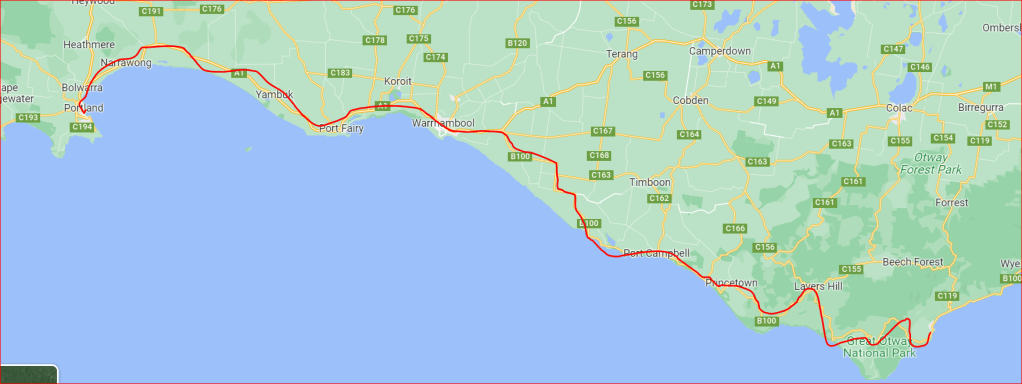
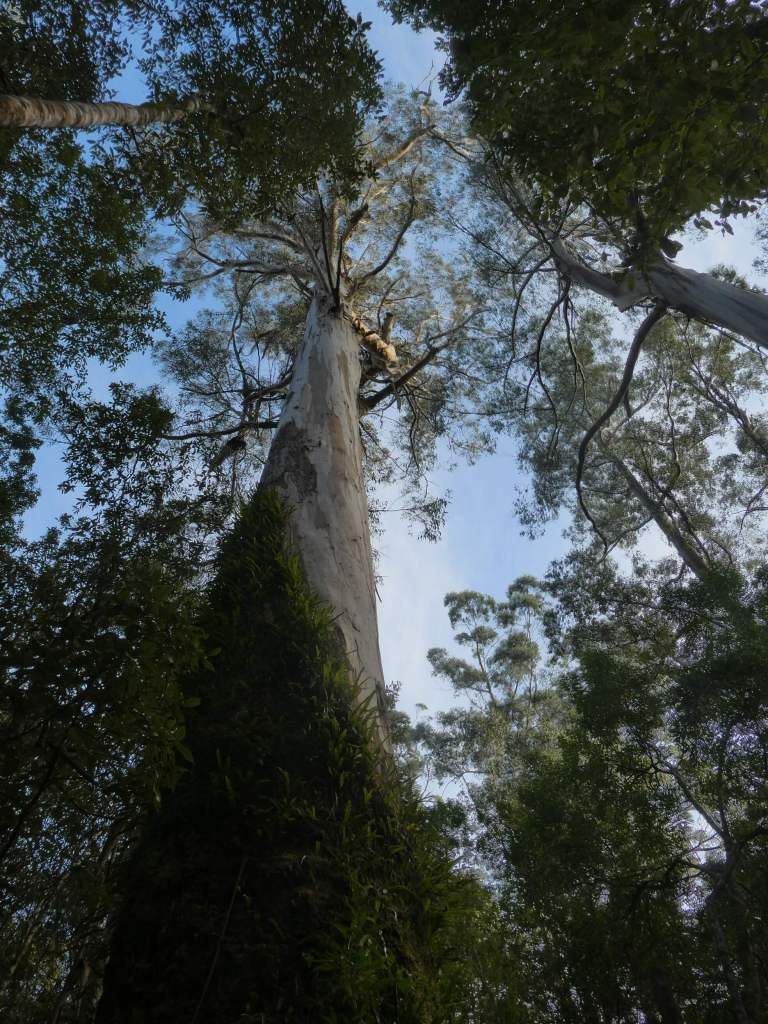
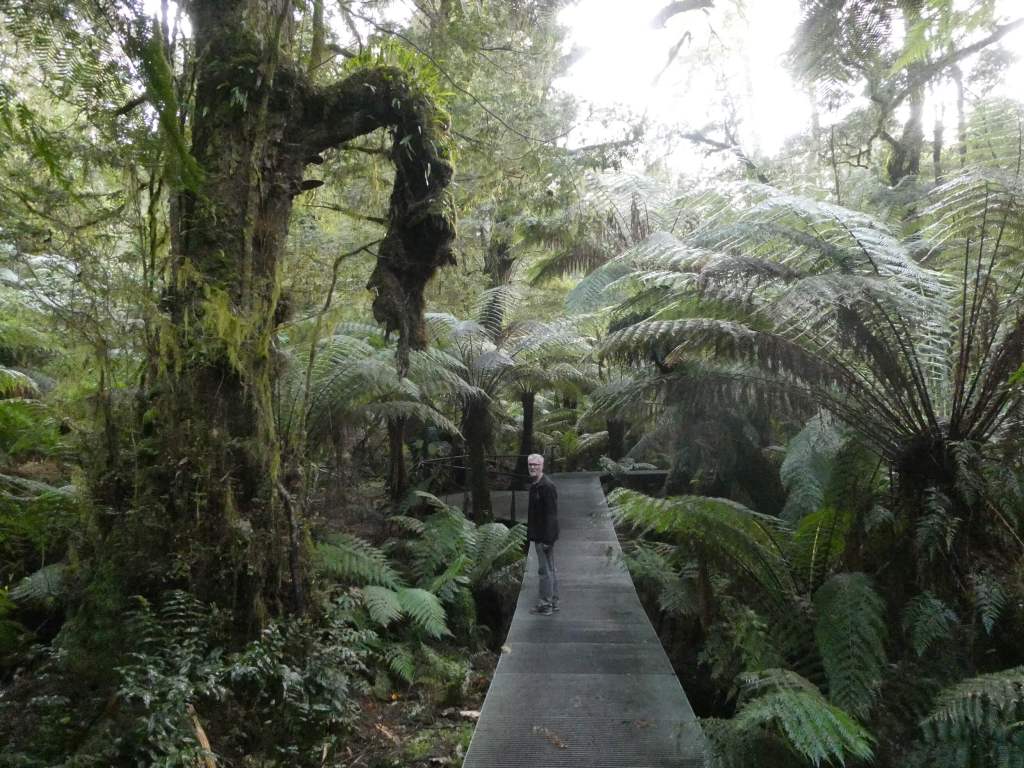
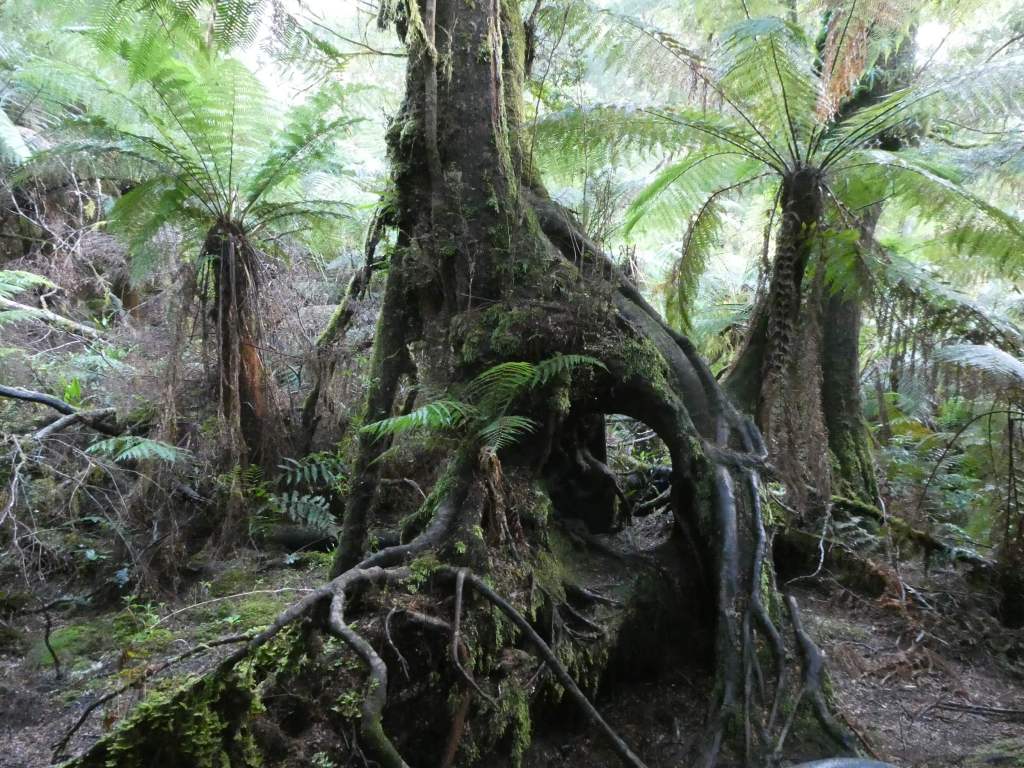
Although it is called “The Great Ocean Road” , the road does not always stay near the ocean. As we took out first inland uptick for the day we stopped at Mait’s Rest for our first little look around. It is called Mait’s Rest because everyone called Maitland Bryant (the Forestry Inspector) “Mait” , and this is where he used to rest his horse on his rounds back around 1914. The 800m walk here is a delightful adventure through rainforest and Mountain Ash. There is even a carnivorous snail that lives here (although we didn’t see it). This was a breathtaking walk which we really enjoyed. The signs were very informative without being too much, and we were encouraged to stop and let our bodies sense the forest. I think it helped us to soak in all the experiences of the day to come.
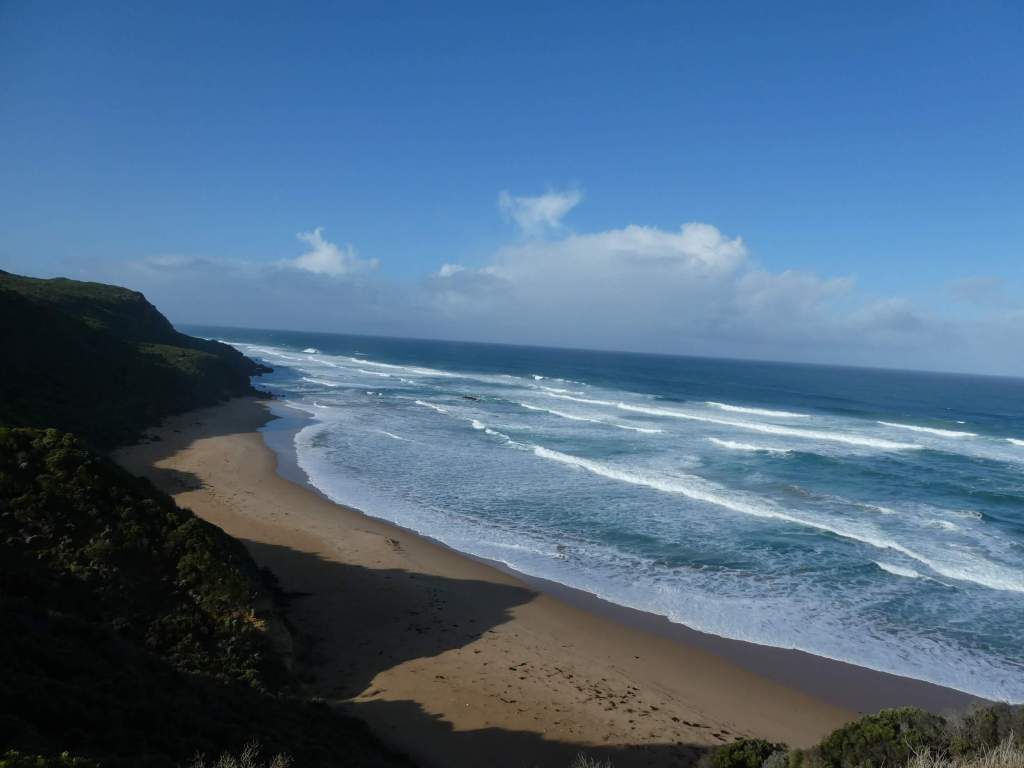
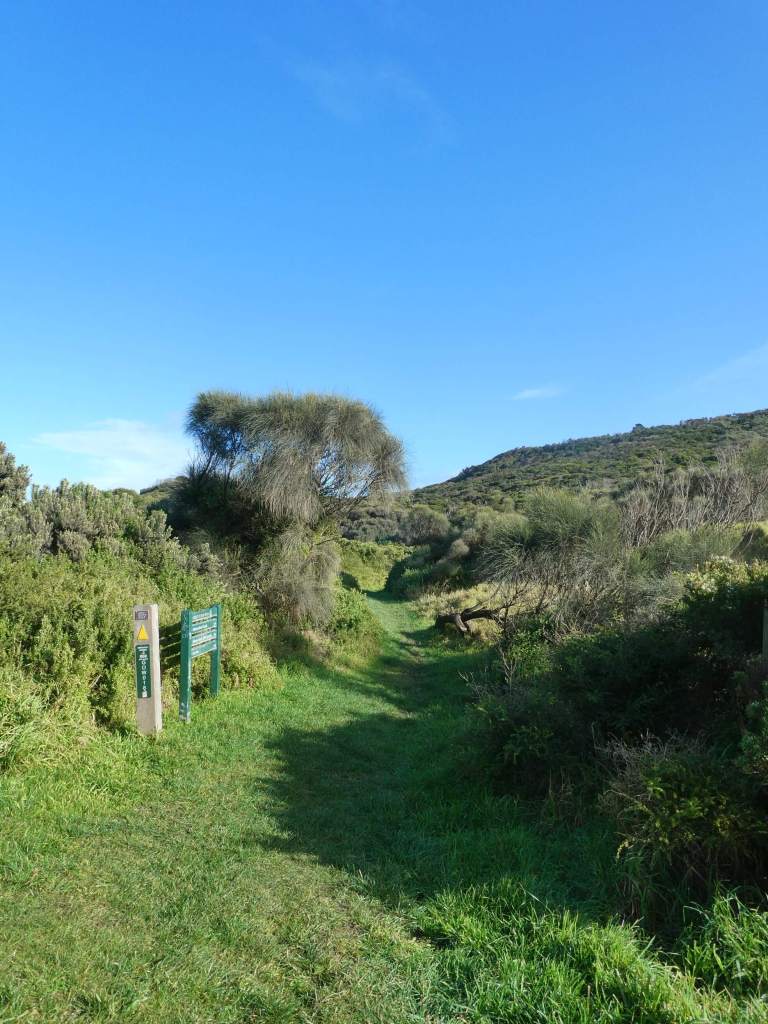
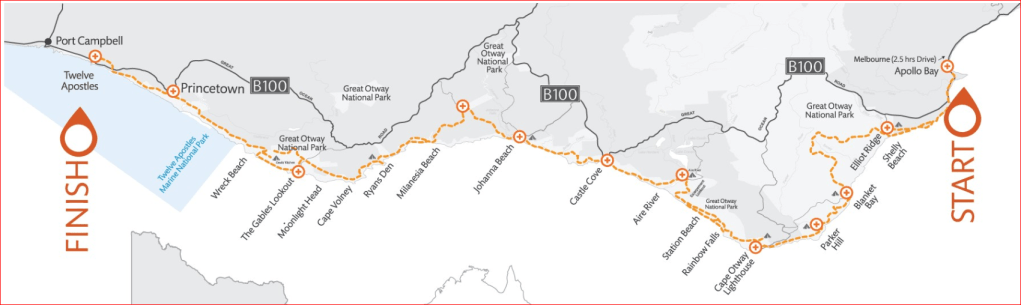
After this lovely walk we headed back to the coast and Castle Cove Lookout. From here we looked out over the ocean again, enjoying the magnificent views back along the coastline. We also were able to glimpse a look at the path that is used by the Great Ocean Walk. In this spot the path was a narrow grassy one. There was a map on a board showing the extent of this long walk It would certainly offer the chance to gain some great views of the coast, but would be pretty ambitious I reckon. They recommend that you cover the 110km from Apollo Bay to the Twelve Apostles in 8 days.
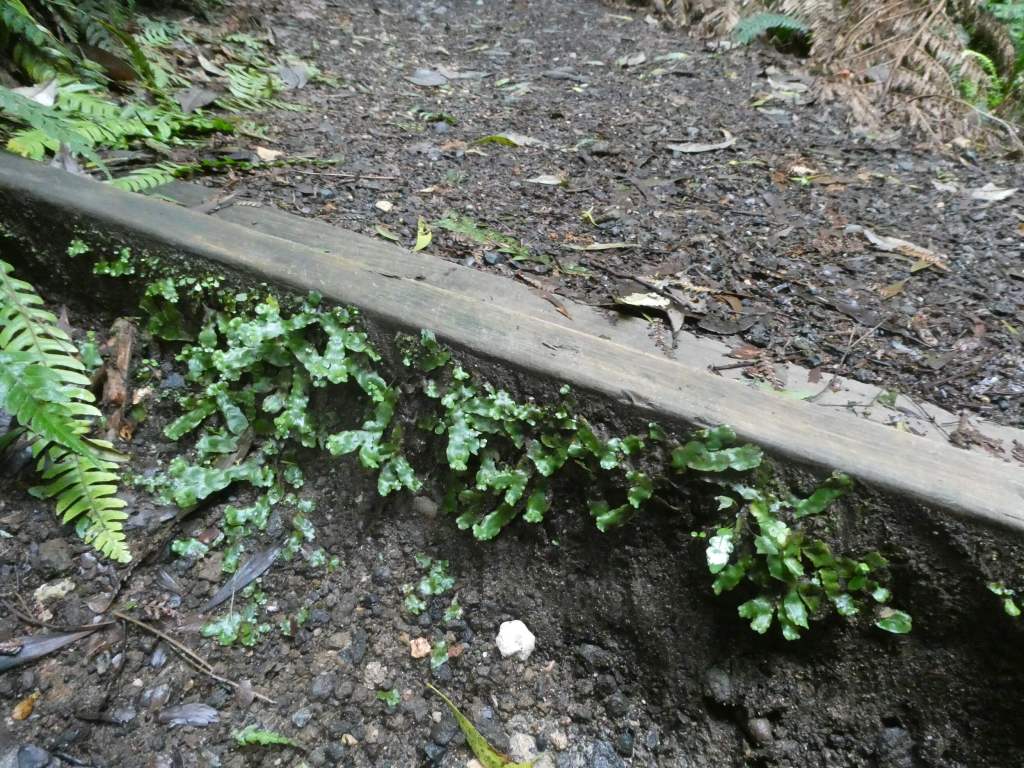
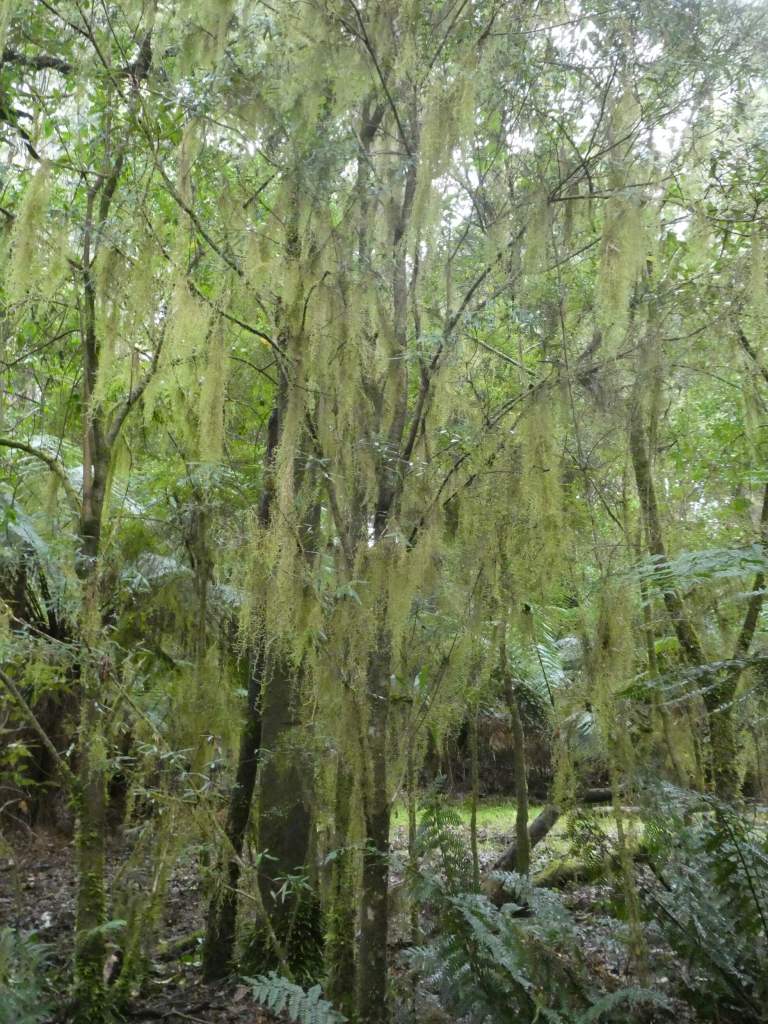
Heading inland again, we stopped to do the Melba Gully Walk. This is the spot where Jessie Fry used to have tearooms back in 1921 and she named the gully after Dame Nellie Melba. She operated the tea rooms until 1948 and busloads of people came to the area to enjoy the tea and the bush here. Then they restricted the length of bus allowed on this road winding through the mountains, and the tourists dried up, and so did Jessie’s tea room business. She sold the property to the Madsen Family, who donated it to the Victorian Conservation Trust in 1975. The 1.2km walk through here is named after that family in recognition of their generosity. It is another delightful rainforest walk, with walkways to protect the roots of the huge trees and a beautiful stream gurgling along between the ferns and trees. There is also quite a large, grassy picnic area just below the large carpark.
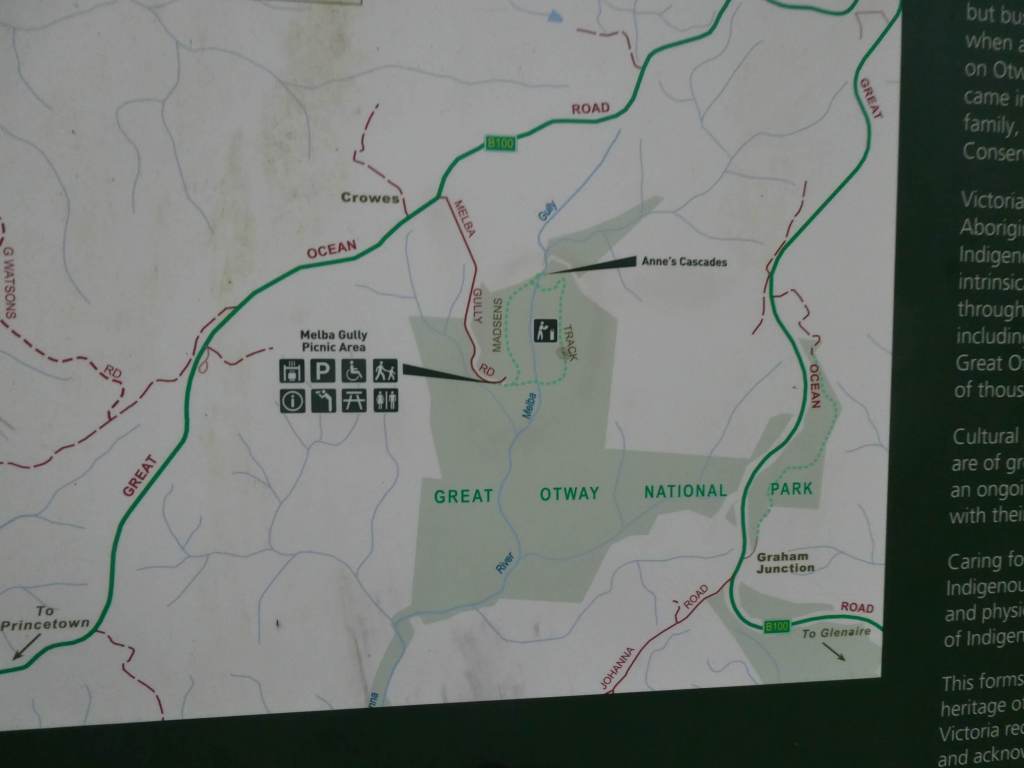
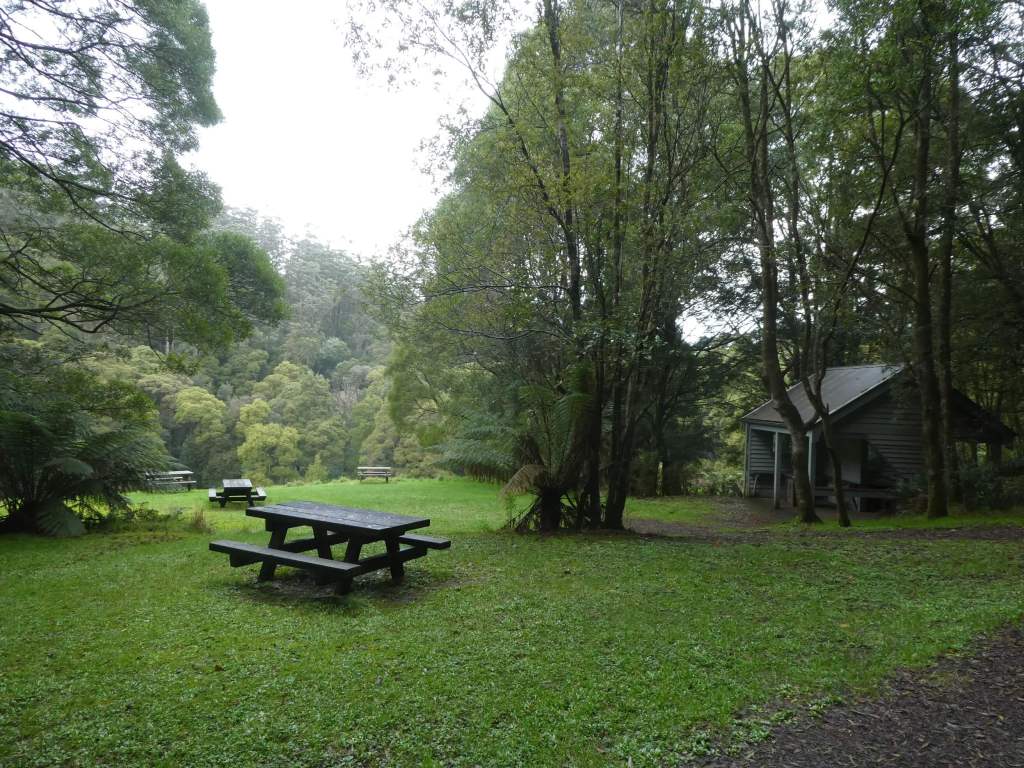
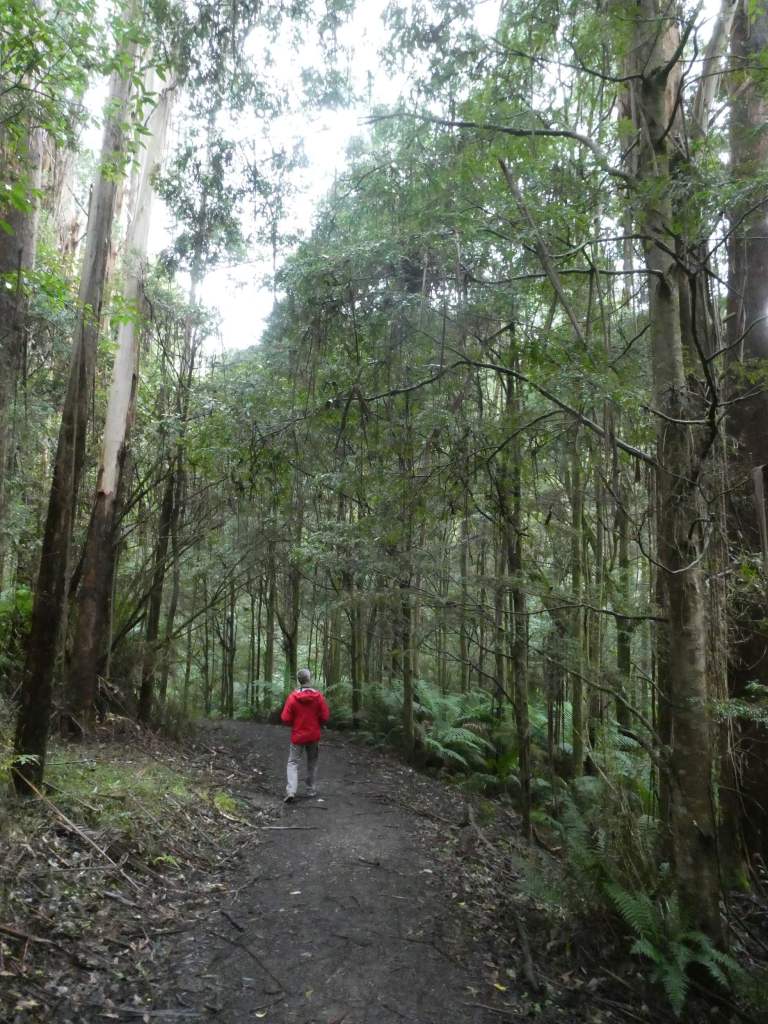
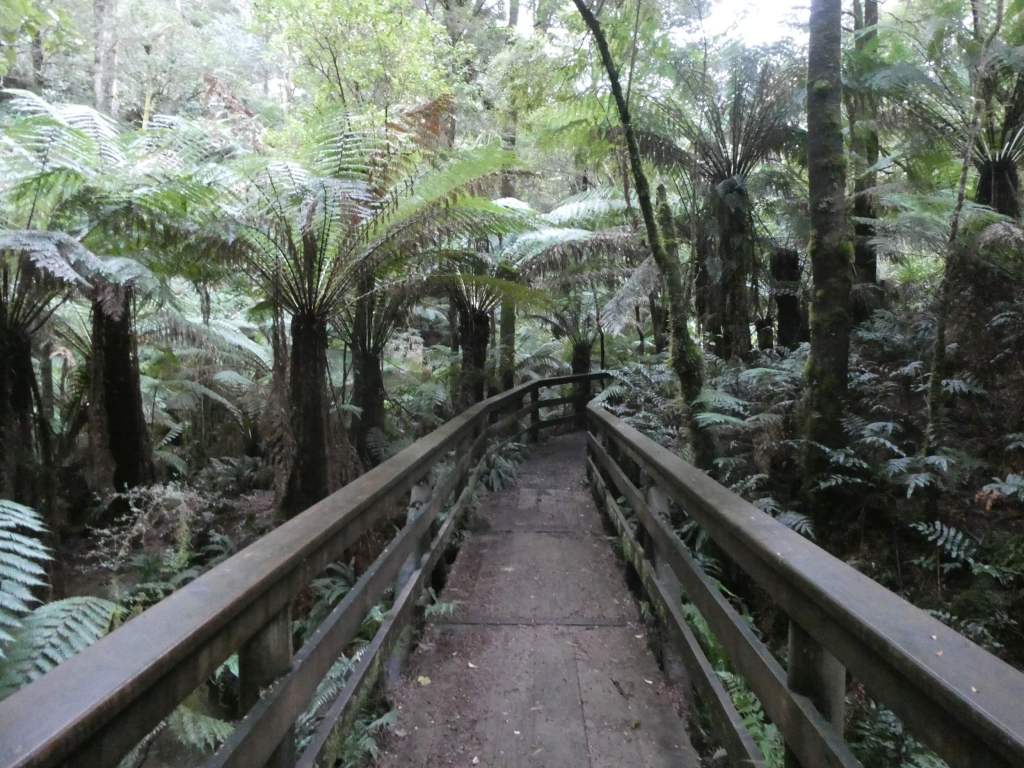
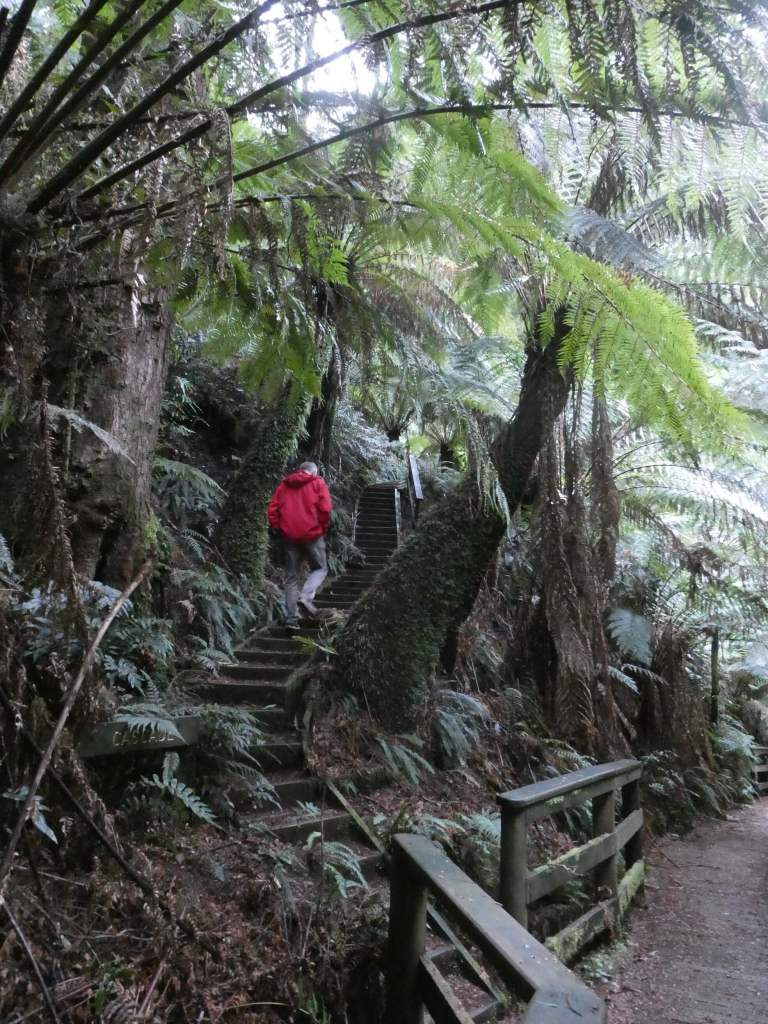
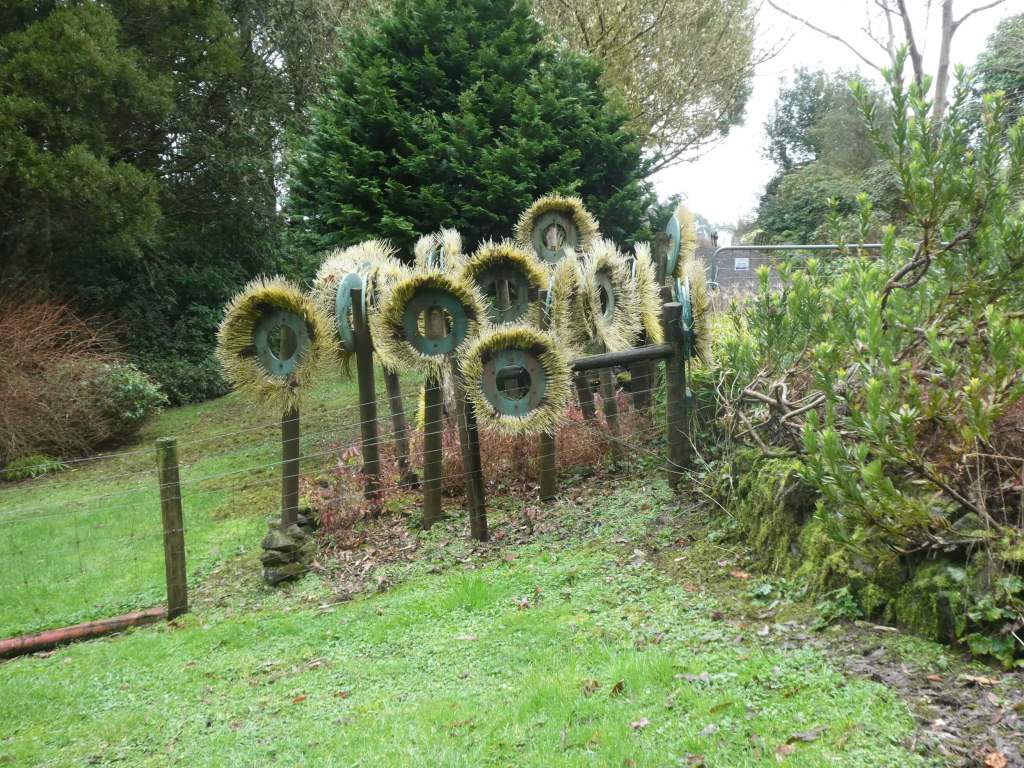
We had the place to ourselves on the rather wet walk and stopped in the carpark to eat a snack under the watchful eye of a large black Raven before proceeding on any further. As we drove out towards the end of the Melba Gully Road to meet the main road again we noticed the lovely sunflowers that someone had put by the end of their driveway – maybe made from the brushes of a street sweeper?
Back on the road again, and we decided to take a side road and get out to the coast again. This was a fairly dodgy road at times, but took us out to a track, which we then followed to the Gables lookout. We could see the Ocean Walk track again at one point, and were quite close to one of their remote campsites which must be pre-booked.
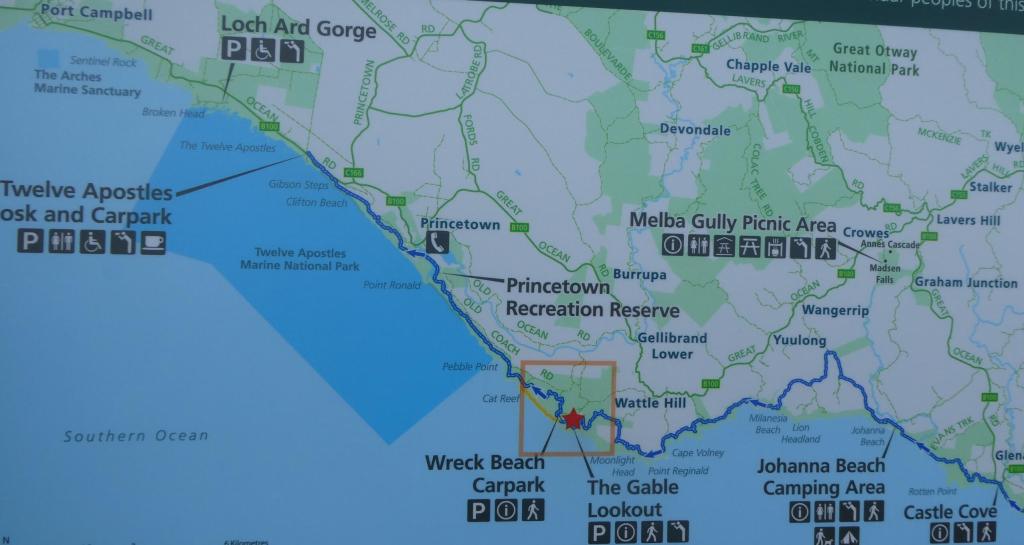
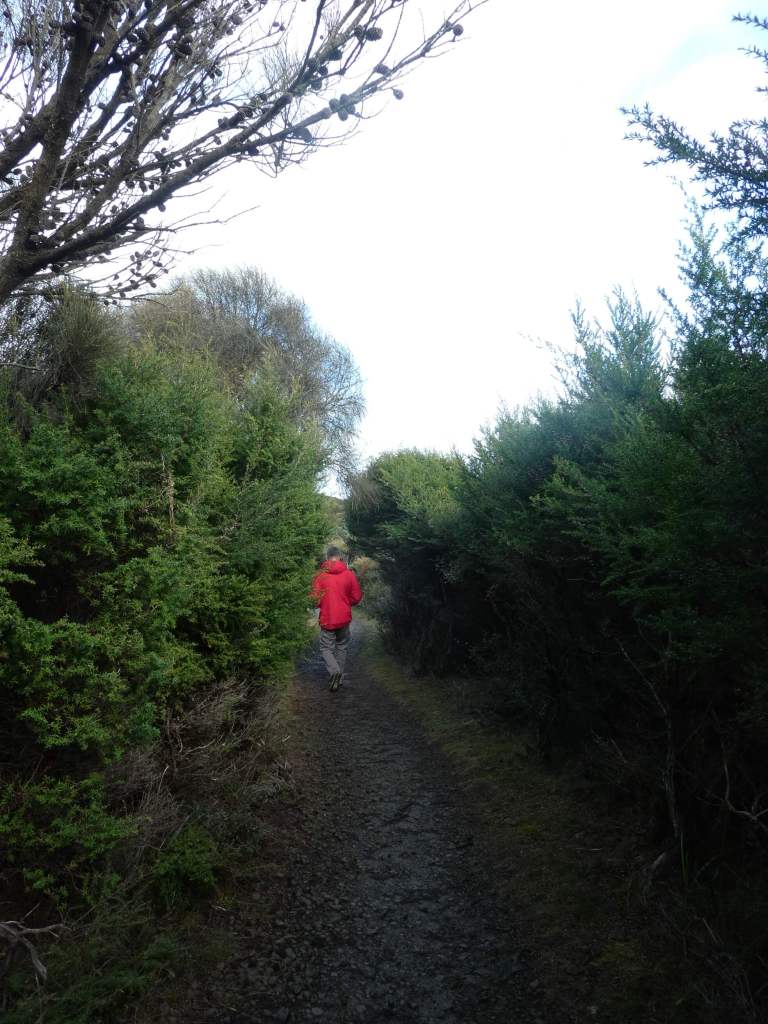
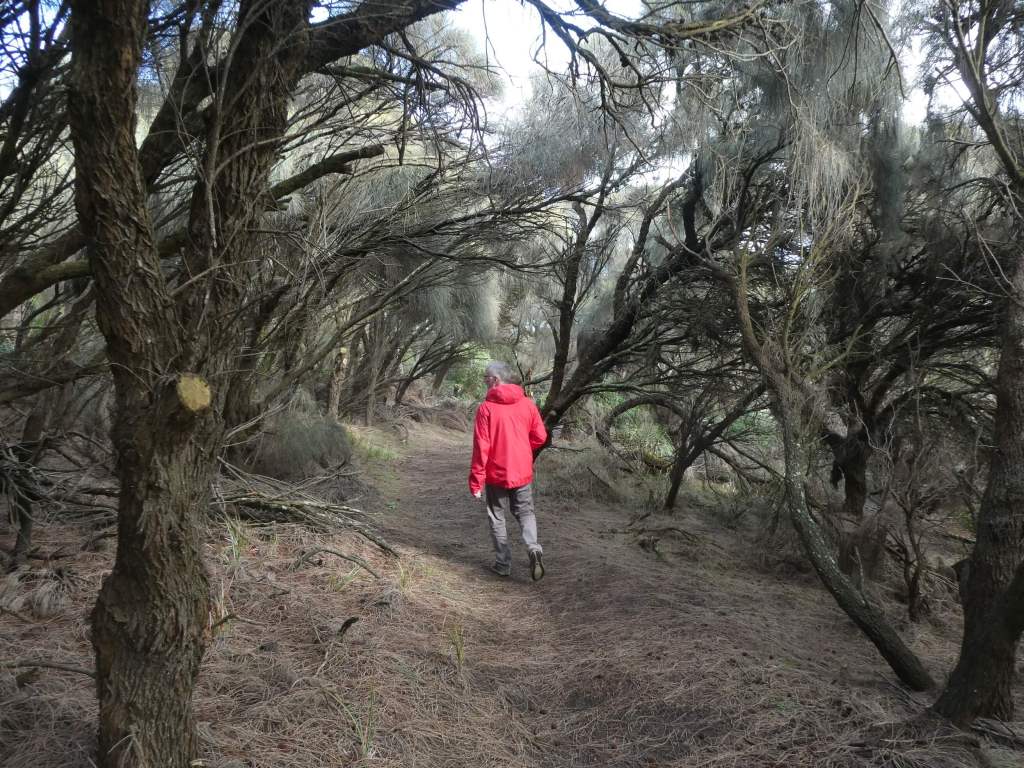
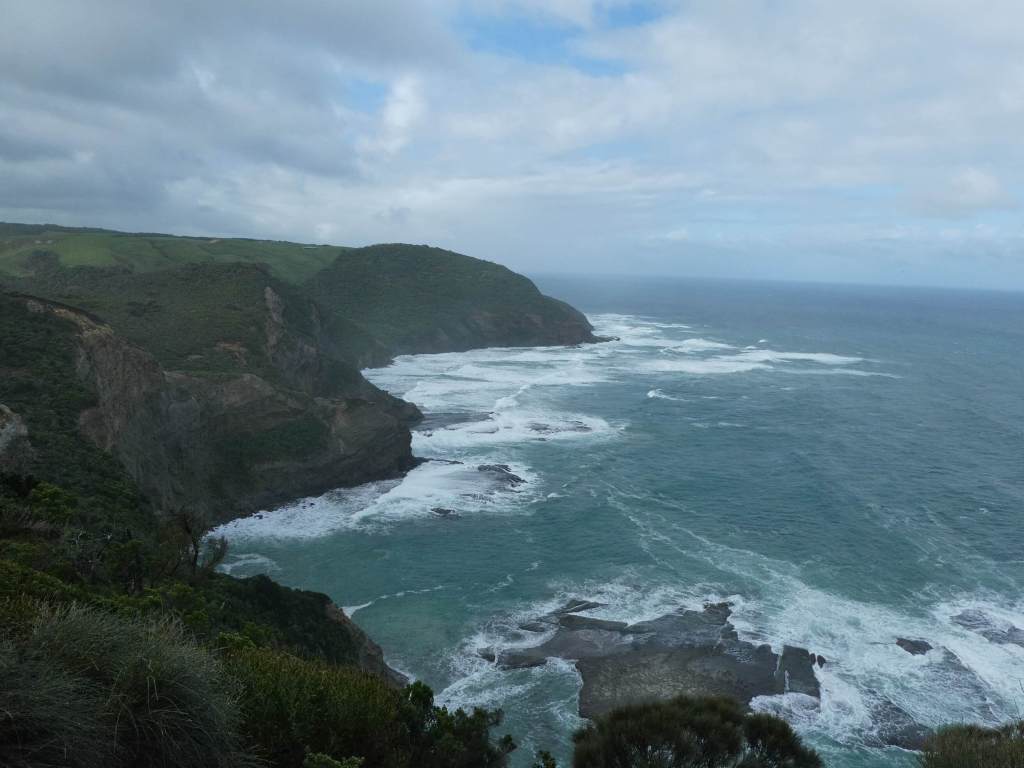
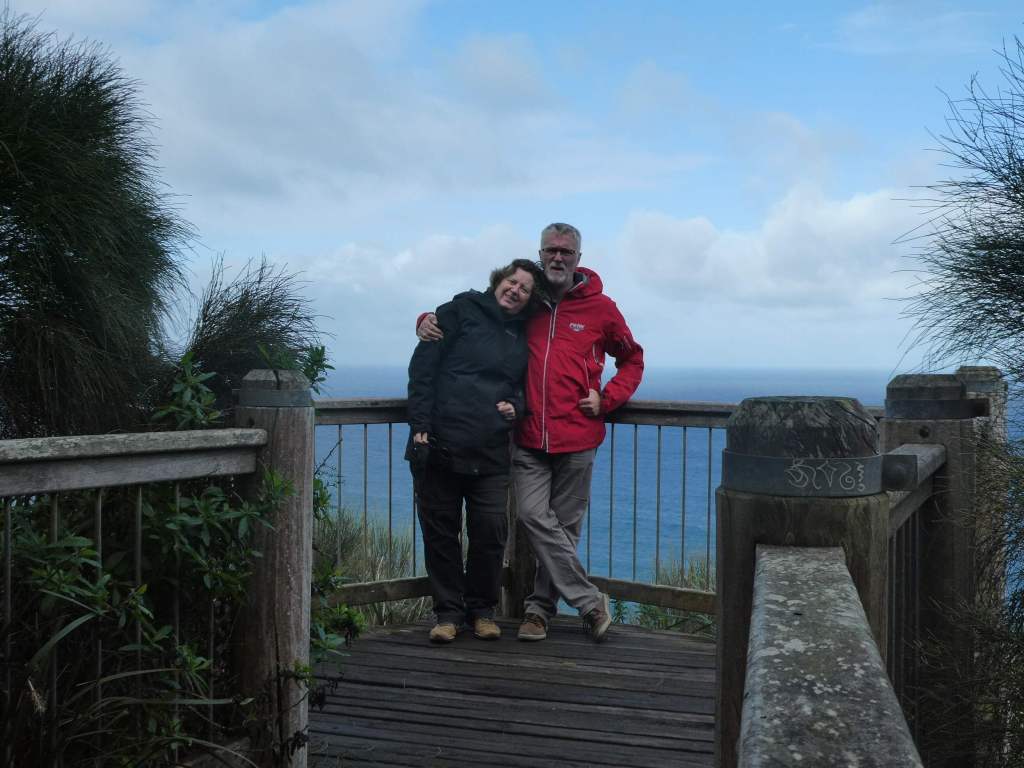
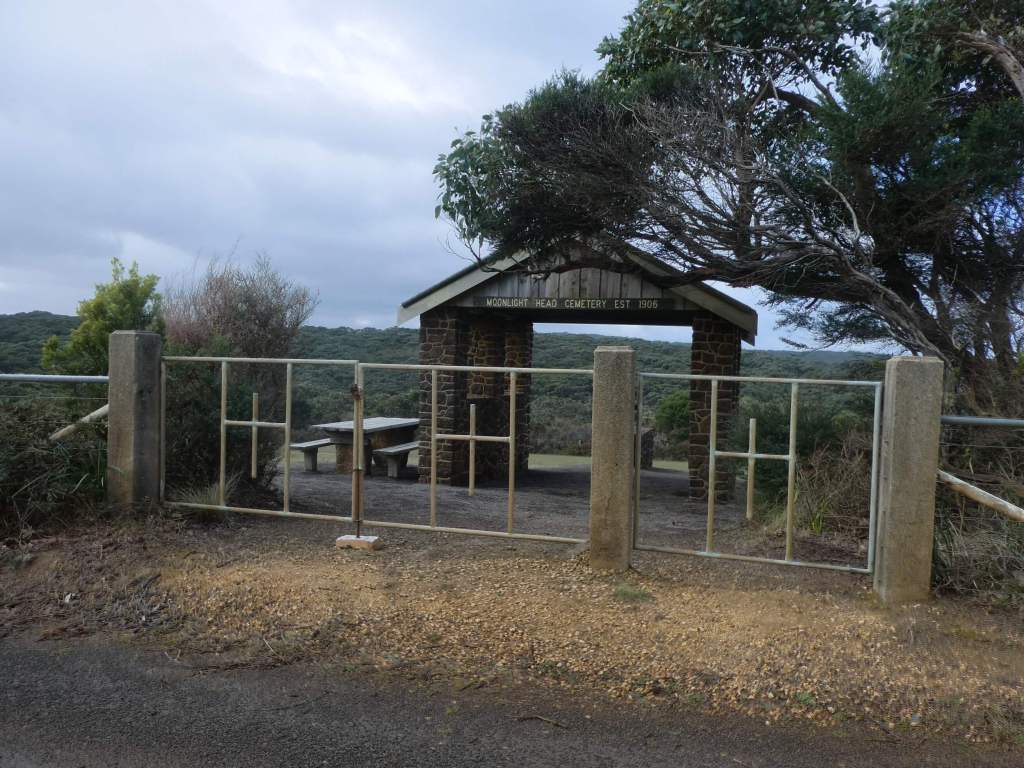
On the way back out we stopped to take a closer look at Moonlight Head Cemetery. This very remote little spot on the isolated road and is the final resting place for a number of those who lost their lives in shipwrecks near here. The bluff near here is called Moonlight Head.
The next stop was a short one just off of the road. Gibson Steps (to the beach) offer an access down to the cliff base and beach, which is something not often found near here . This lookout also offered us views of the first of the big eroded rocks out off of the coast, which was exciting. There were a number of young people way down below on the beach, frolicking in the cold waves on this very windy day. We decided not to take the many steep and slippery stairs down and then back up again.
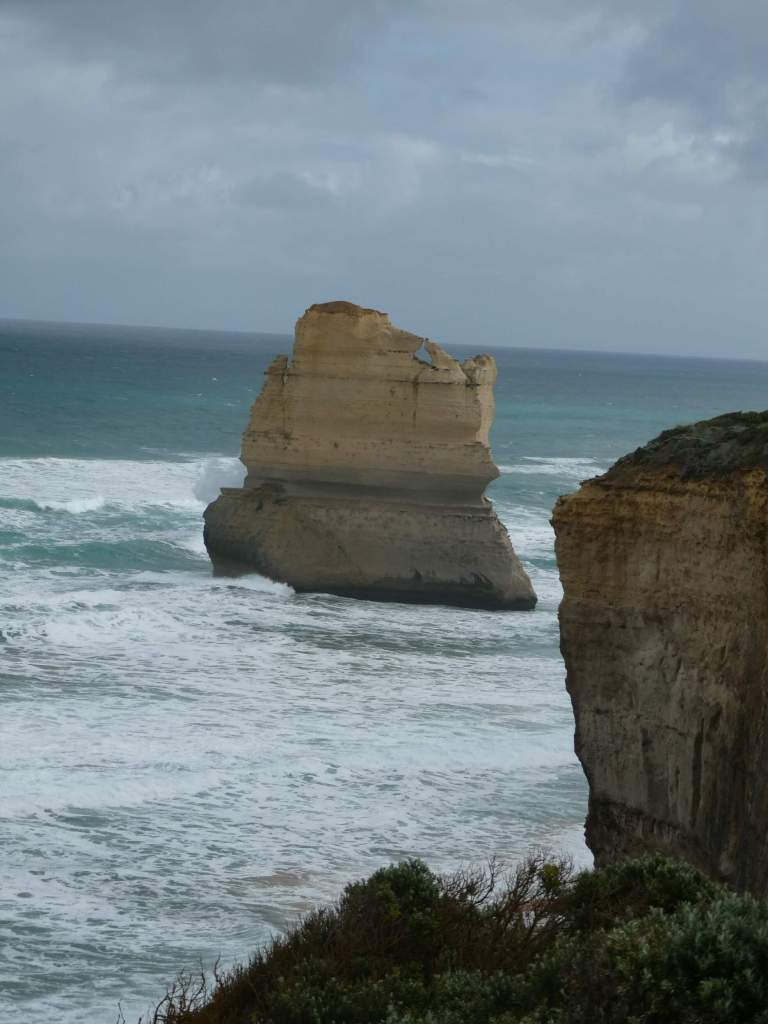
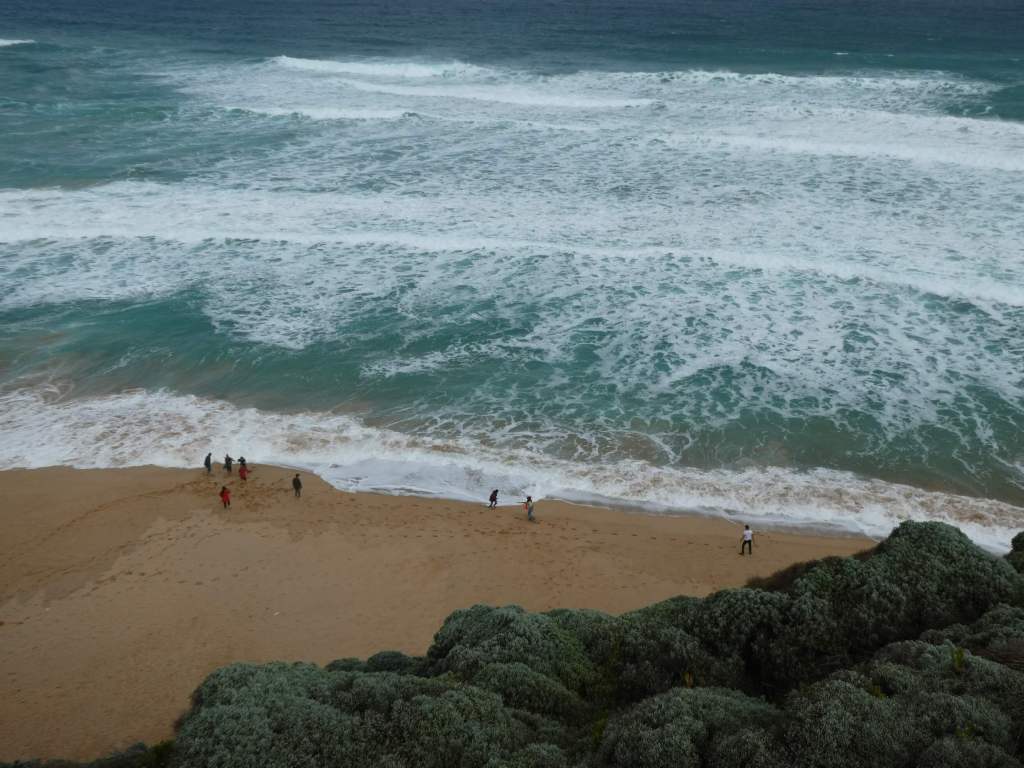
We pulled in to the Twelve Apostles carpark at about 1230 and headed into the visitor centre to see if we could find ourselves some lunch – a couple of expensive sausage rolls were obtained and we ate them as we walked under the road in the rain to the viewing area to have a look out to sea. It started raining more heavily as we went , so it wasn’t a lingering visit , but more of a pause, walk, pause walk.
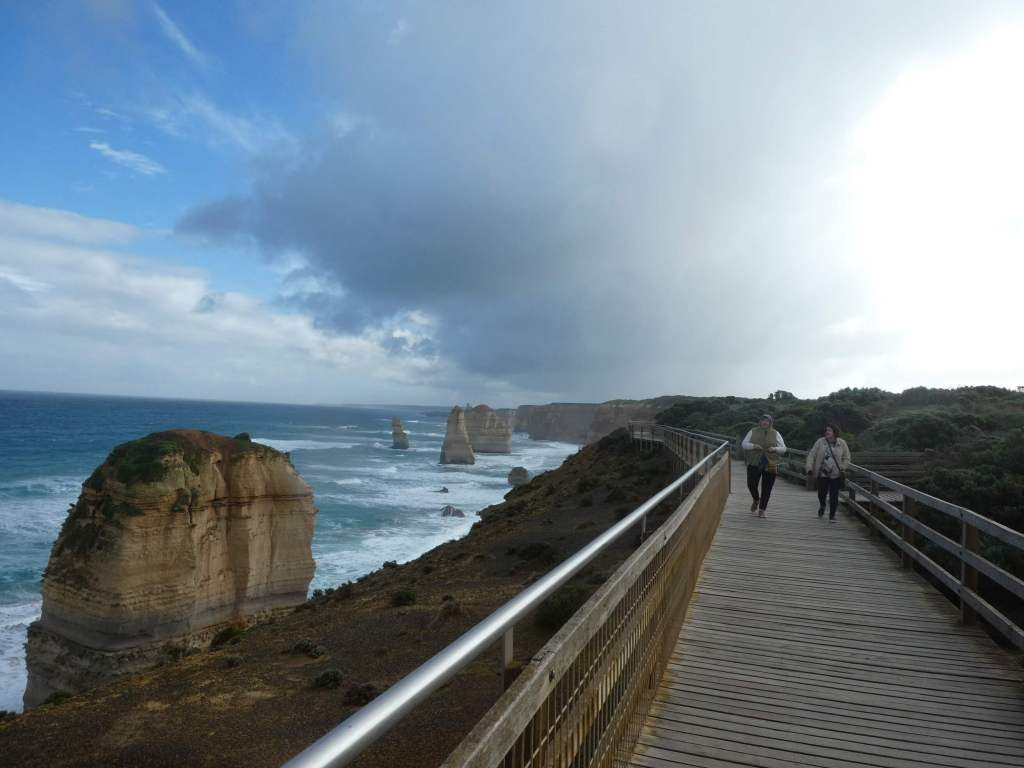
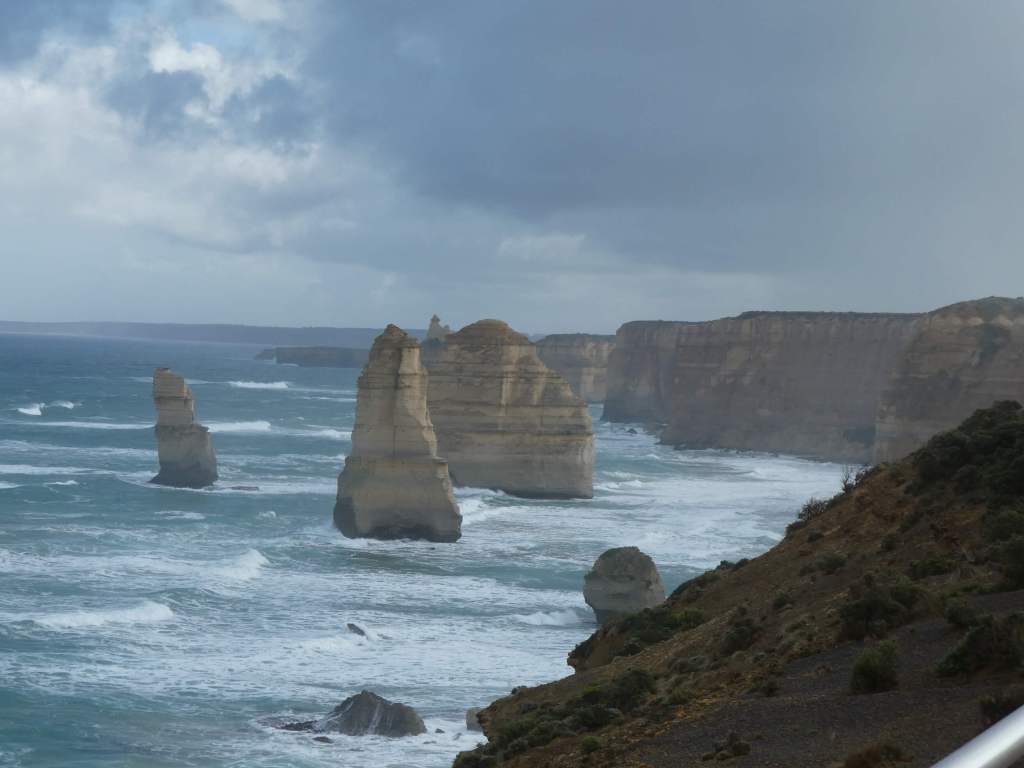
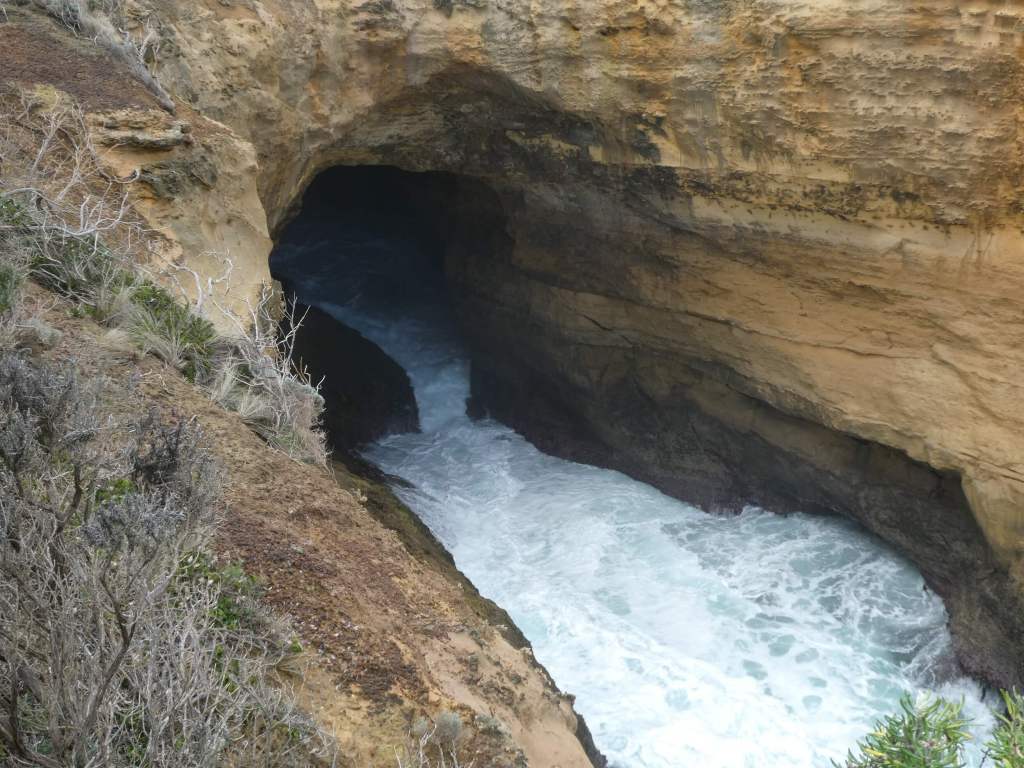
A little further along we took the walk to Thunder Cave (which used to be covered over the top, but the top has fallen in over time)
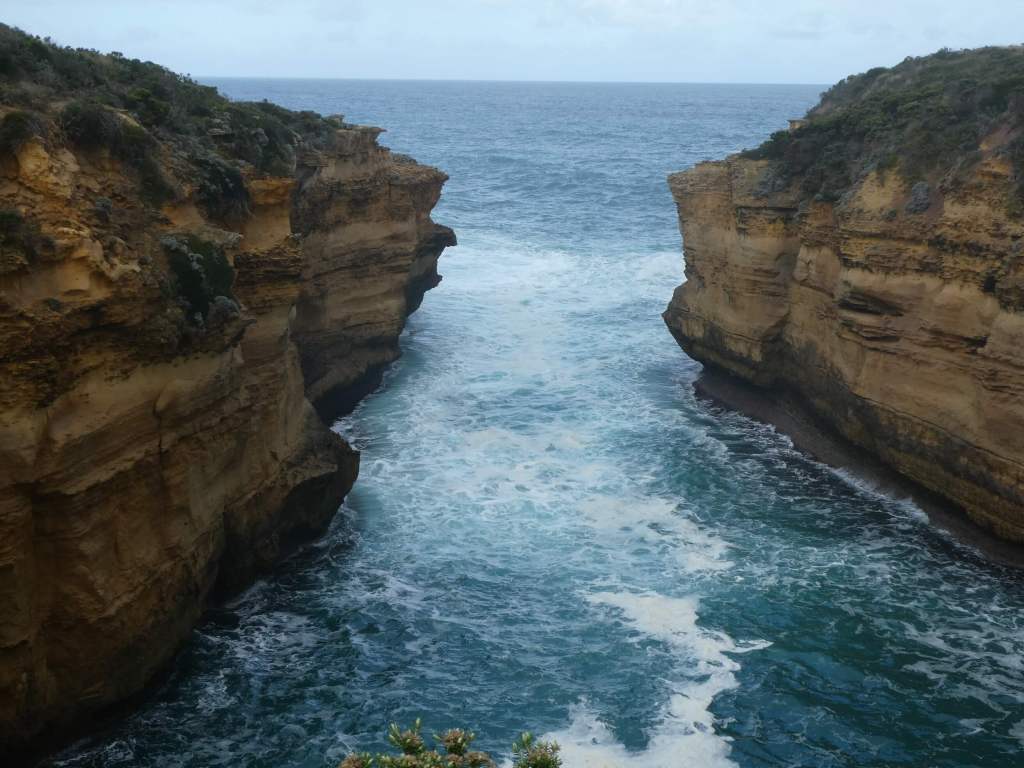
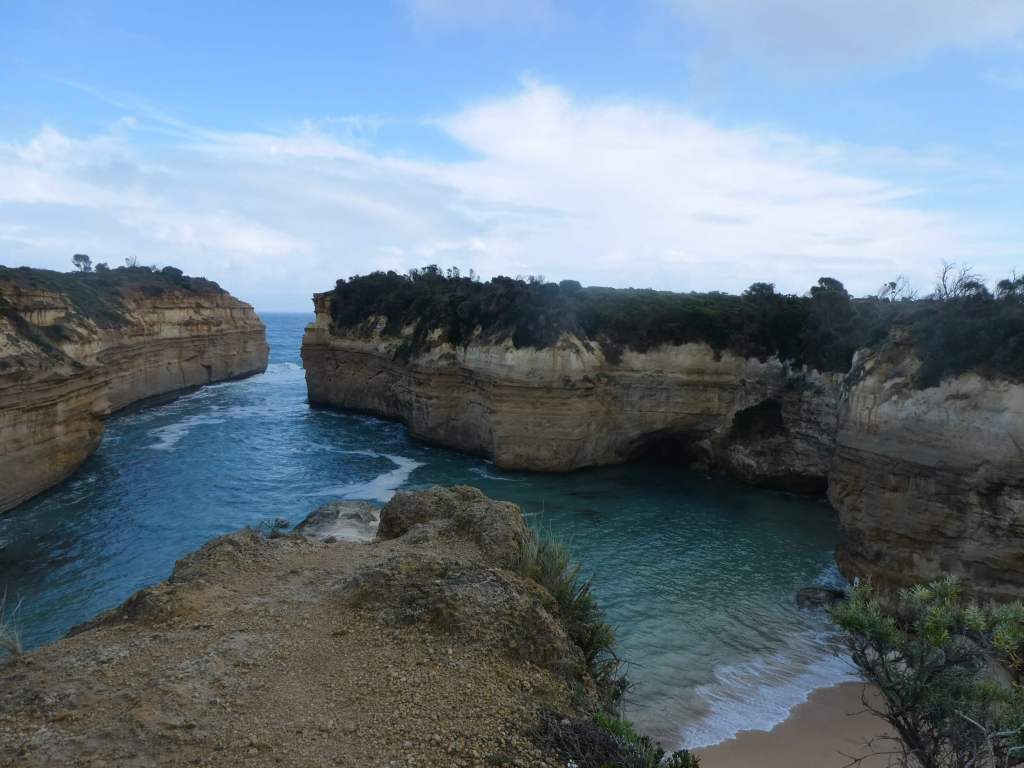
and then on to Loch Ard Gorge where the Loch Ard was wrecked on 31/5/1878. The two survivors were in this more sheltered area. Tom Pearce (a ship’s boy) managed to rescue Eva Carmichael (a passenger) who was clinging to wreckage, and they both slept. The next day he climbed out of the gorge somehow and met two local workers from a local station, arranging a rescue of Eva. They were very lucky to come in to a more sheltered area but how he got out of this gorge escapes me.
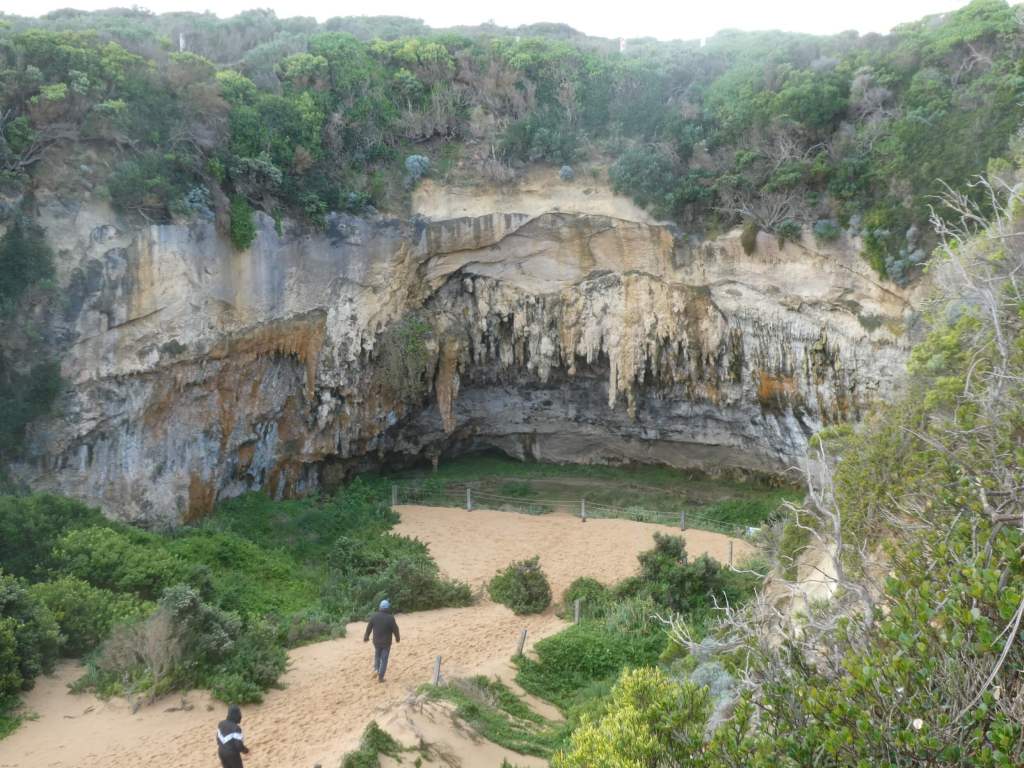
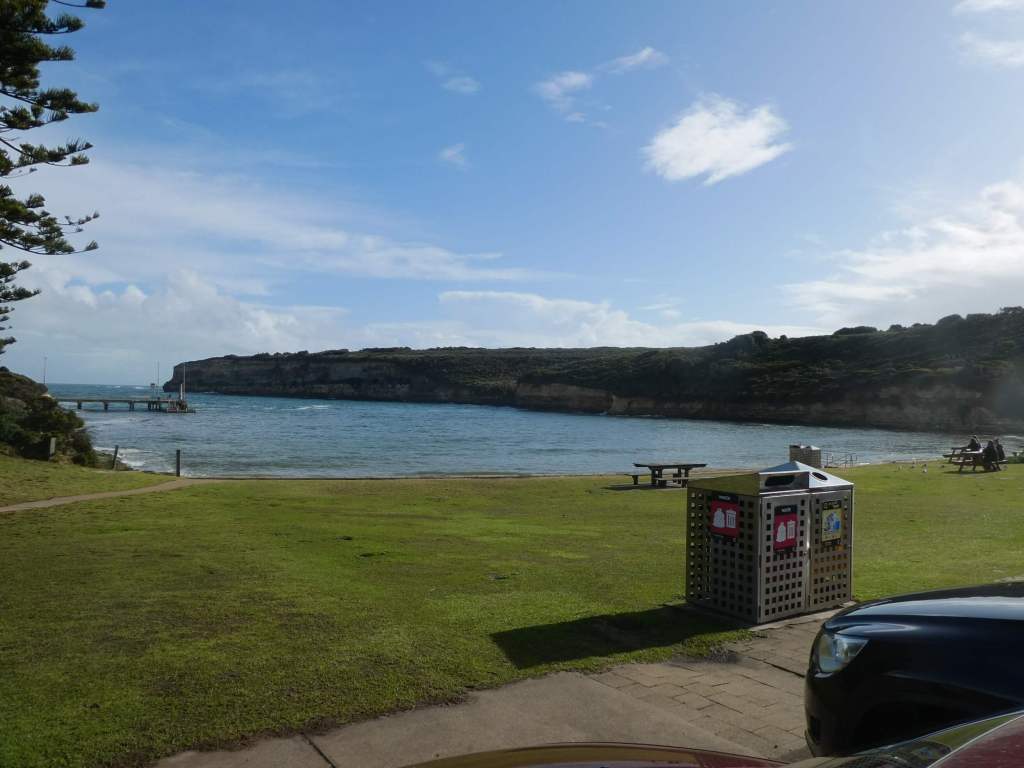
We stopped for afternoon tea at Port Campbell in one of the many cafes, looking out over the bay.
Before pulling in once more to visit the Bay of Martyrs. Trev walked on to see the Razorback while Erica repaired to the car, keeping out of the rain and resting her knee which was now starting to complain.
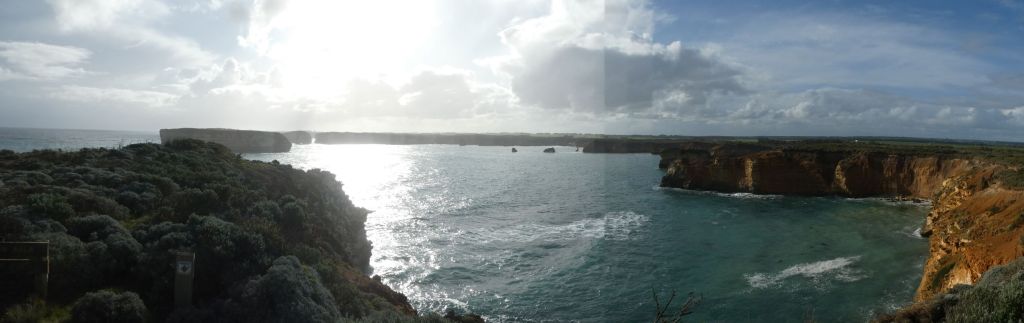
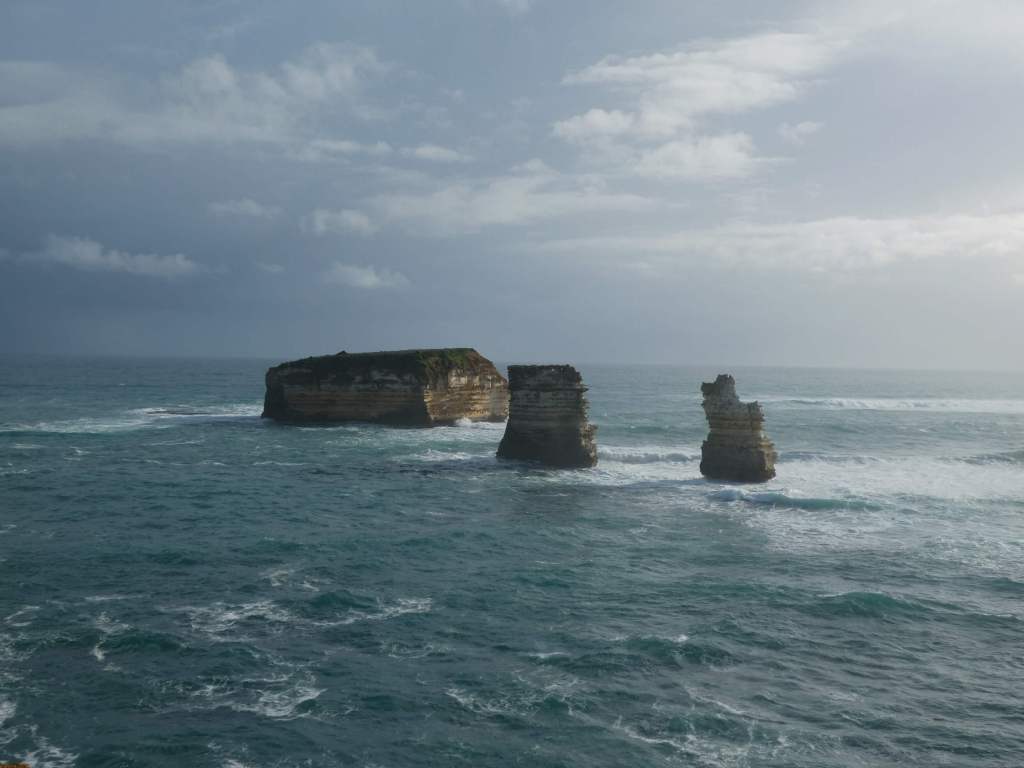
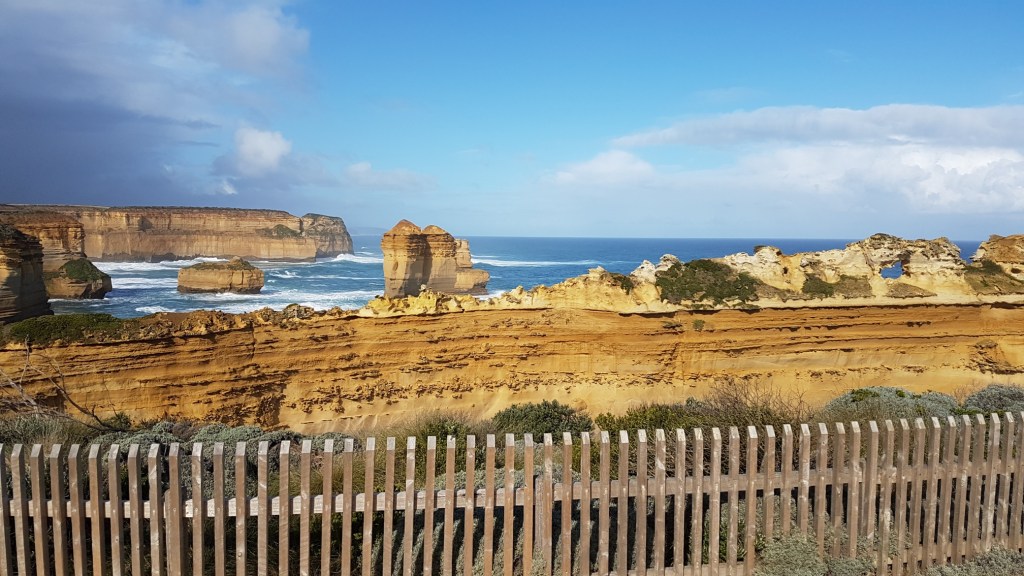
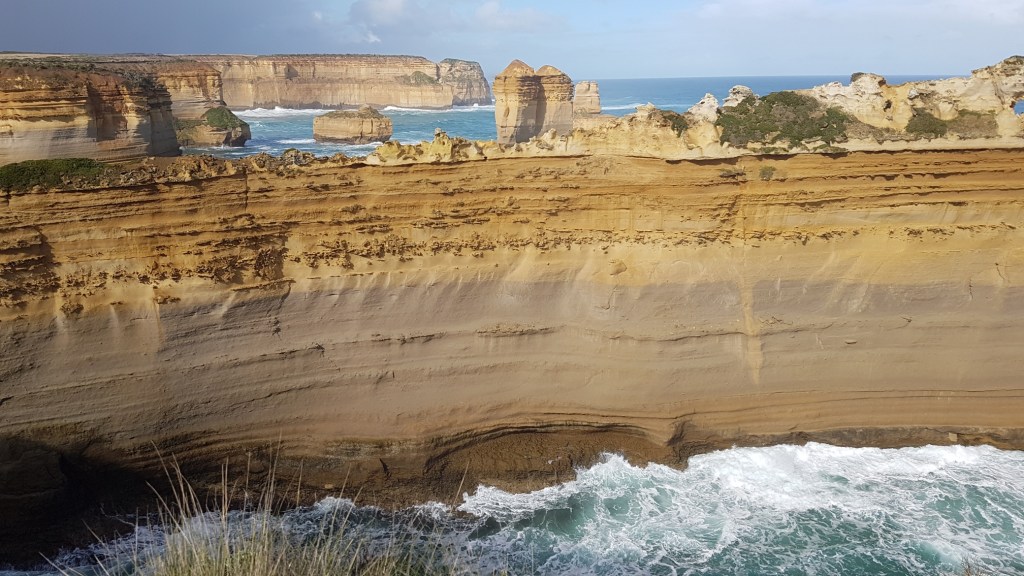
Another stop gave Trevor a chance for another walk to the coast to see “The Grotto”
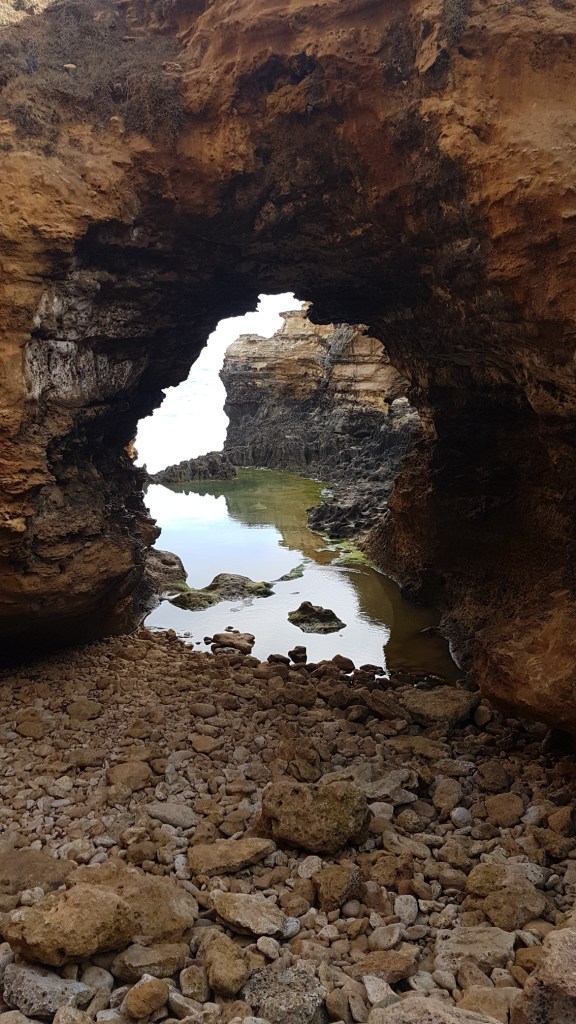
By now we were starting to decide about where we would be stopping for the night, finally settling on Portland for a destination, booking the motel room online. We travelled onwards towards Warnambool, where we headed once more for the coast (past an impressive lake and parkland area) . We watched the very high waves crashing around on this windy day and looked out at the huge breakwater wall on one side of the point, and Middle Isand on the other side. Middle island is home to a little penguin colony and also many shearwaters. The area is minded by Maremma dogs who live on the island with the birds. There is no public access except on tours. Two Maremmas guard the penguins during the breeding season and stay on a farm when they are not on duty. This saves the penguins from foxes, which cross across to the island at low tide and are able to decimate the population.
We chose to walk across the pedestrian bridge near here and out to Pickering Point, where we walked for a short while, but the wind was really howling and eventually we decided that was far enough and back-tracked to the car.
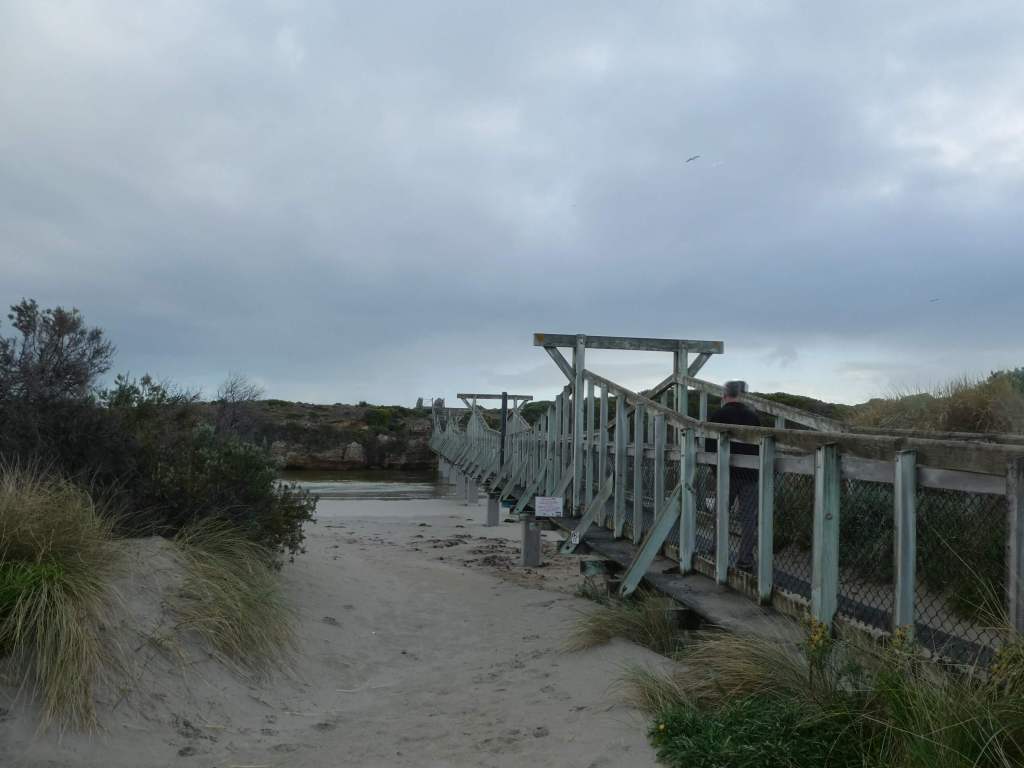
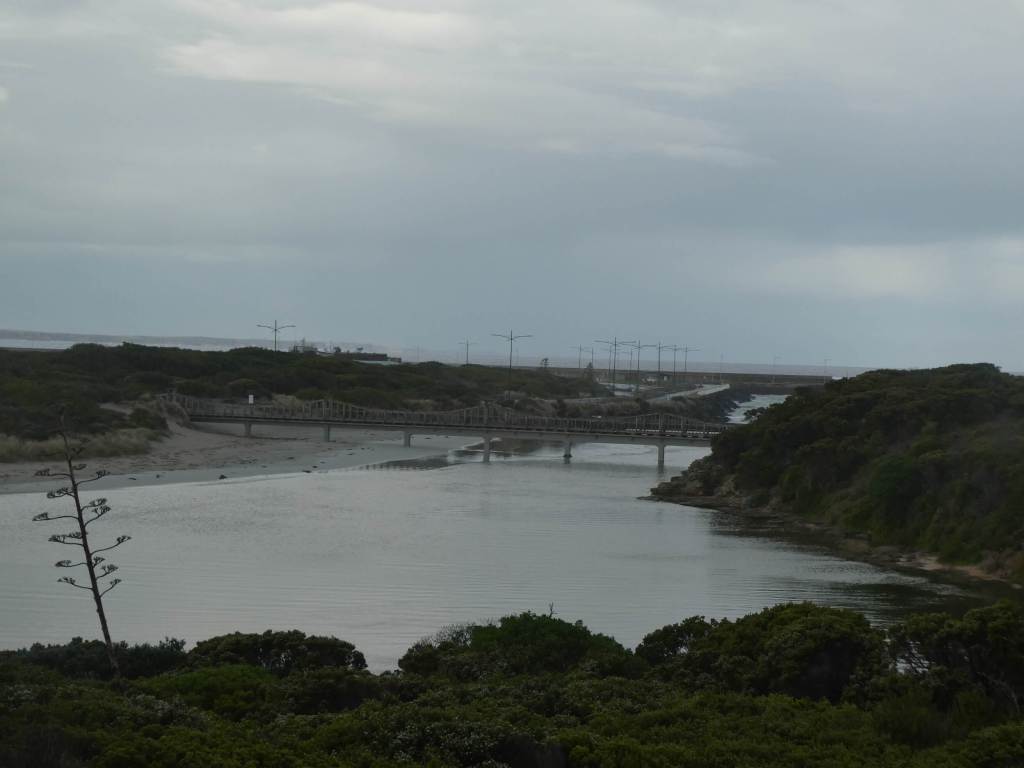
We detoured briefly through Port Fairy before continuing on our way. The Codrington Wind Farm (opened in 2001) was quite visible on our left as we drove. Apparently this was the first commercial wind farm in Australia. They say the site is near to perfect for the purpose because of the strong prevailing winds coming off of the Southern Ocean. I can believe it.
Portland, not surprisingly has a big port. We could see the ships lining up waiting for their turns and had to ask Mr Google what is transported from here. The answer was mainly raw products to make aluminium and sustainable forestry products, but livestock, grain, mineral sands and fertiliser also get a guernsey. Our motel was out the back of one of the grand old hotels in the middle of town. We ate out dinner at the hotel and enjoyed the fact that the motel was not busy (no neighbours to make a noise). I think the drive was just less than 300km, but all the stops had made it a very long day.
 Luvapuzzle