We have been on the road for a month today.
We were up At 5:15 to get ready to go on our bird tour. We walked down the road to the reception area to meet our guide (Susie) and hopped in the bus with five others. Susie was a VERY enthusiastic leader and really into birds. We were able to see thirty different kind of bird during our two hours with her, including the rare and endangered Gouldian finch and a female red backed wren. The colourful male remains on our “ yet to be seen” list.
Once we were back from our birding we had a quick breakfast and headed out to Sir John Gorge. This is one of the large gorges on the Mornington property and we rock hopped to a nice rocky ledge area with a few trees giving a bit of shade and swam from there.
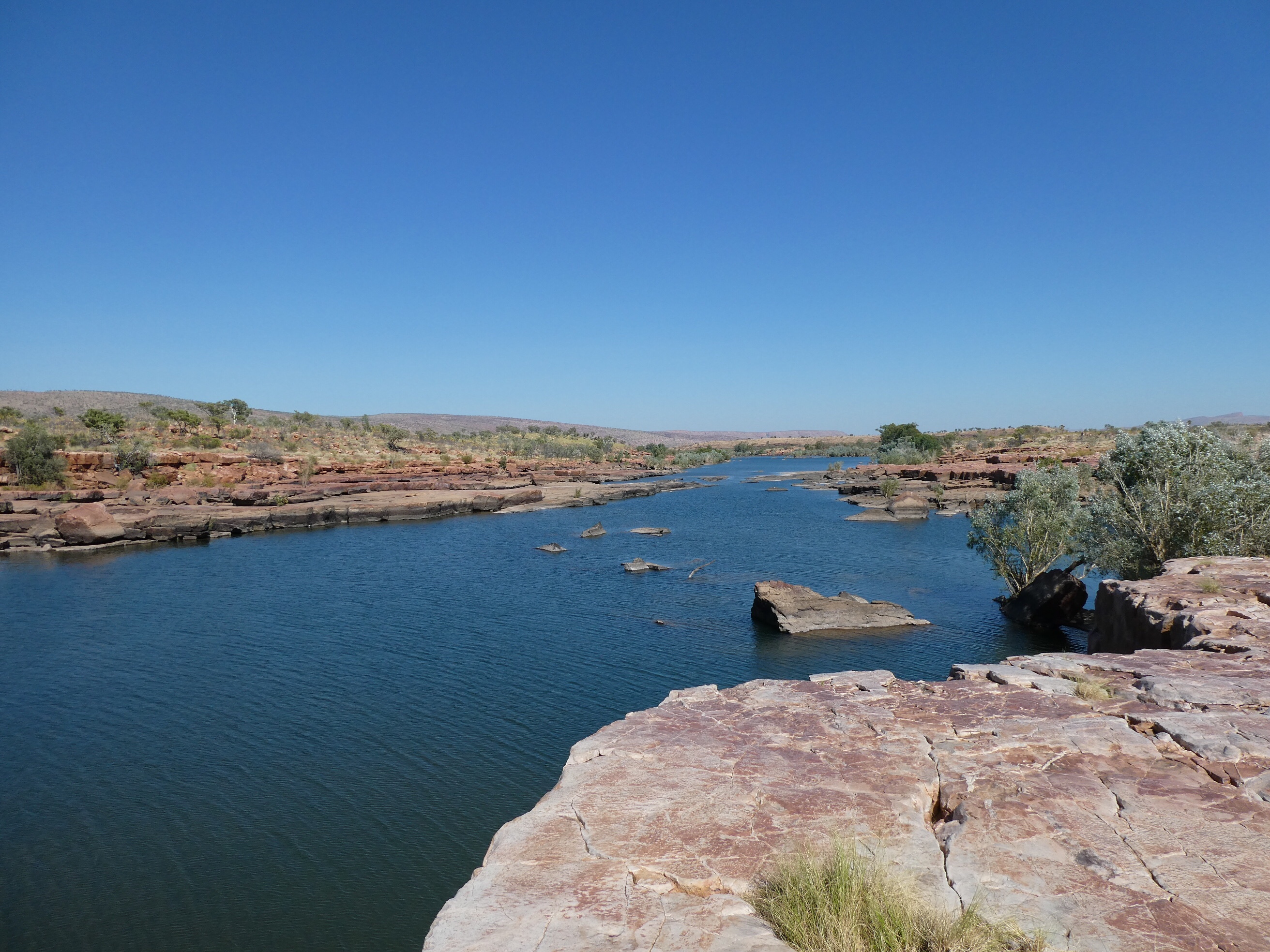
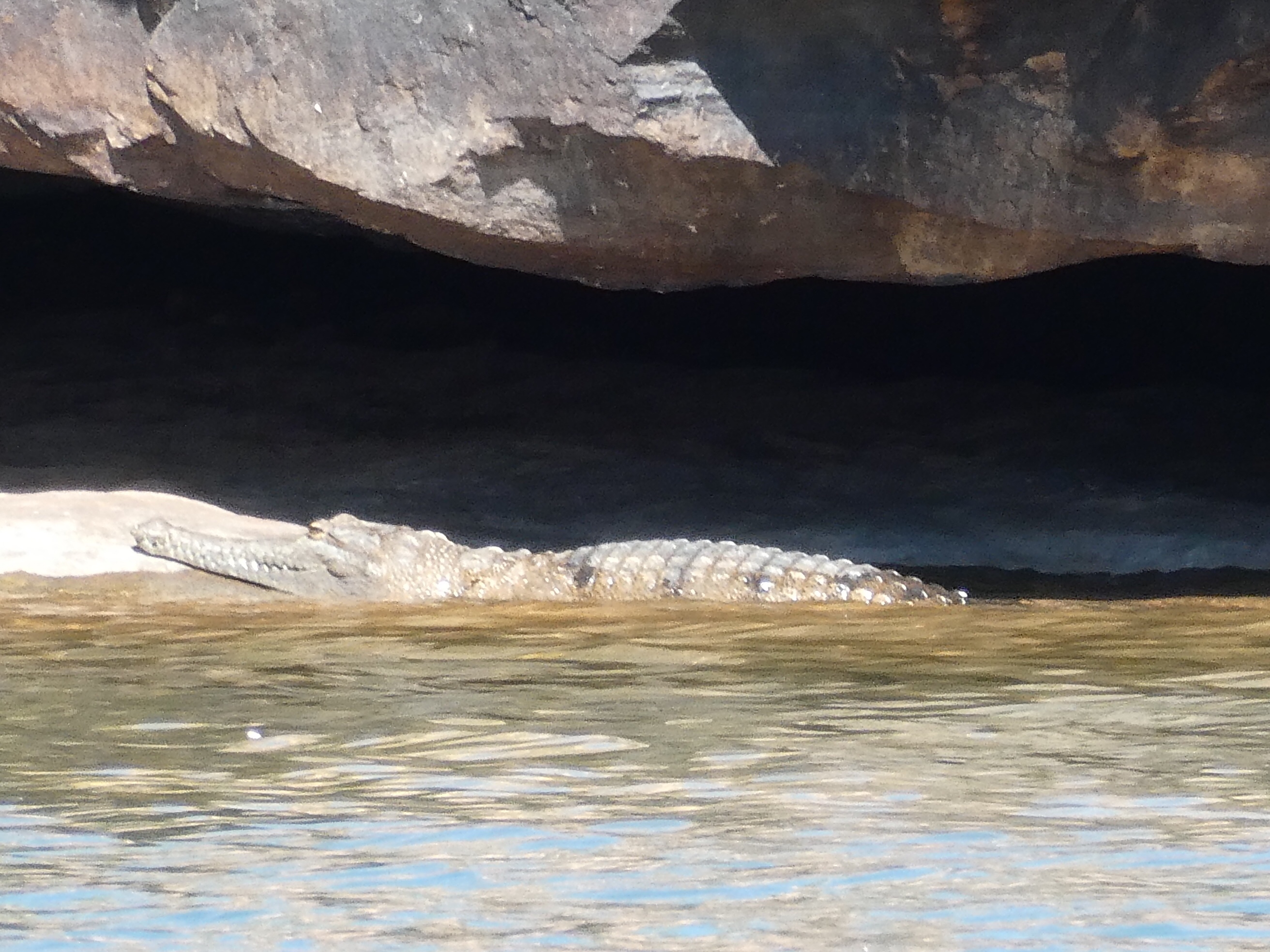
A freshwater croc livened up our day by providing us with some interest.
We drove back and into the Blue bush wetland but by now it was midday and very hot. With no shade it was quite overbearing. We spotted an intermediate egret, straw neck and Australian ibis and some masked lapwings and retreated to the air conditioned vehicle.
We continued on to Blue bush where we found decent shade by the side of the water and had lunch under the shade. Another swim was next (Zita found a spotted frog clinging to the bank and trying to be invisible).
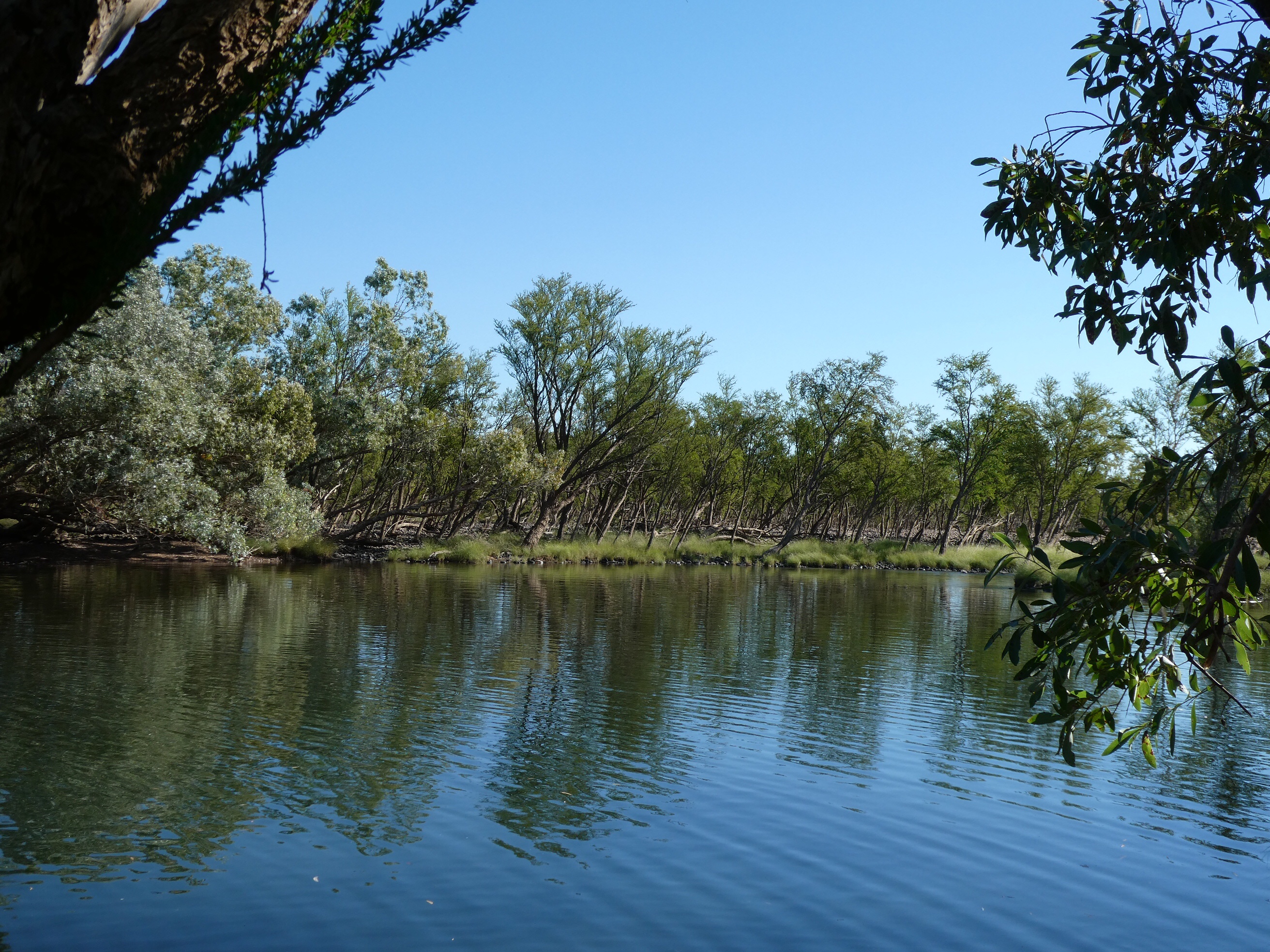
Next we headed on to Cadjeput, where we checked out what it was like. This has more shade and you can drive all the way to the water where there is a sandy beach. Ideal for floating blow up boats and swimming tomorrow.
We were back at camp in time for a shower before we walked down in the dark and had our tea. It was 2 courses and overpriced at $60/ head but very nice to have someone else cook a quality meal for us.
It had been bugging me why most of the boabs have no leaves, but every now and then we see one with leaves (sometimes beside another with no leaves). It is apparently water related. They will drop their leaves to conserve water. If they have access to water like roots into a permanent source then they don’t need to drop their leaves.
An AWC presentation followed the meal- we heard about the work they are doing-especially the patch burning of cool burns early in the dry which leaves habitat for the critters and reduces risk of hot large burns which leave moonscapes later in the dry.
Birds seen at Mornington:
Black faced wood swallow
Grey crowned babblers
red winged parrot
Northern rosellas
Whistling kite
Nankeen night heron
Magpie lark
Little pied cormorants
Black bittern
Double barred finches
Blue winged kookaburra (with a cry like a barking dog)
White winged cuckoo shrike
Little wood swallow
Yellow tinted honeyeater
Gouldian finch
Straw necked ibis
White bellied cuckoo shrike
Magpie lark
Brown Goshawk
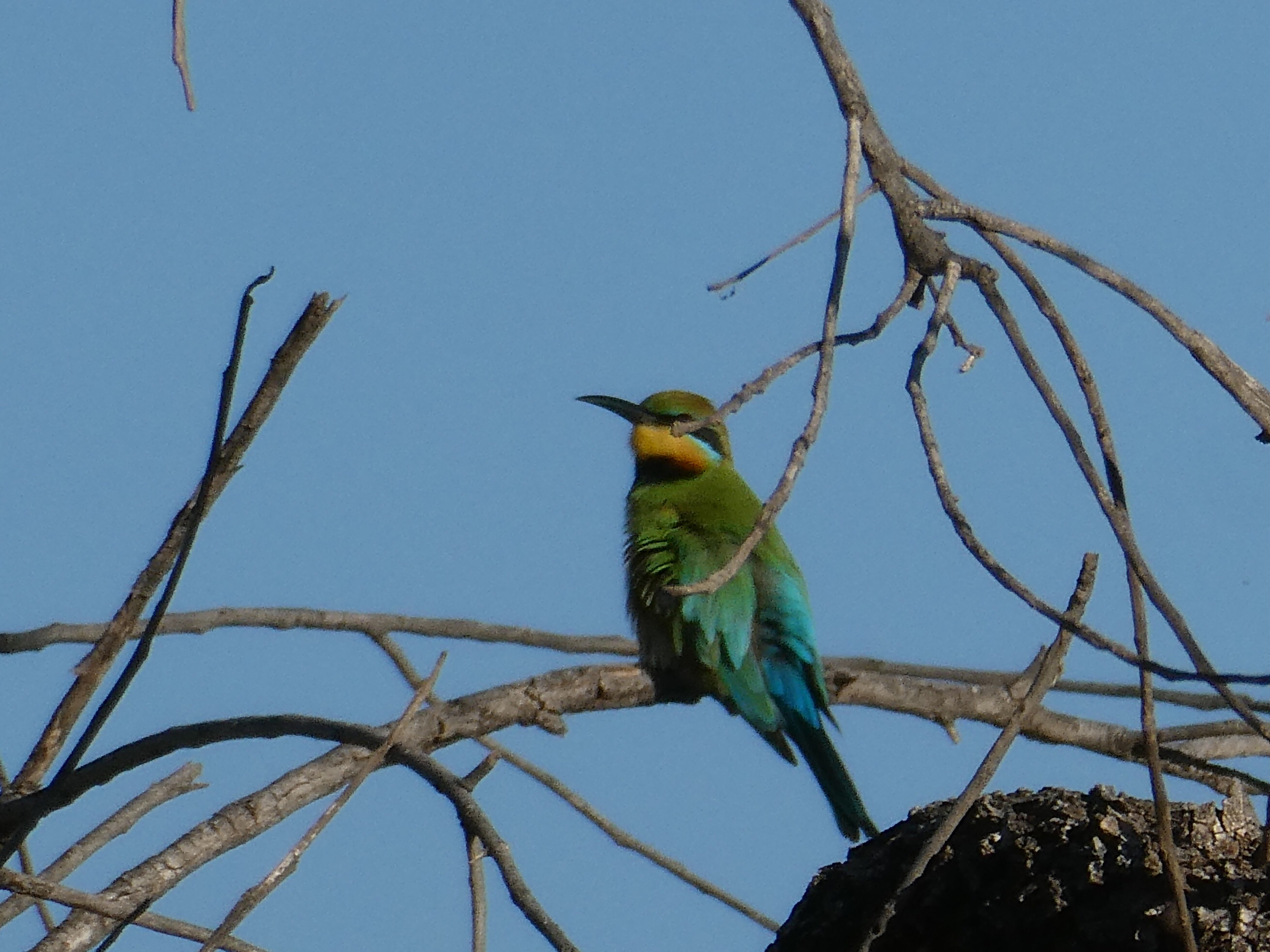
rainbow bee eater (heaps of them)
red backed fairy wren
Pictorella mannikin
Brown quail
Galahs
Brown honeyeaters
Banded honeyeater
Torresian crow
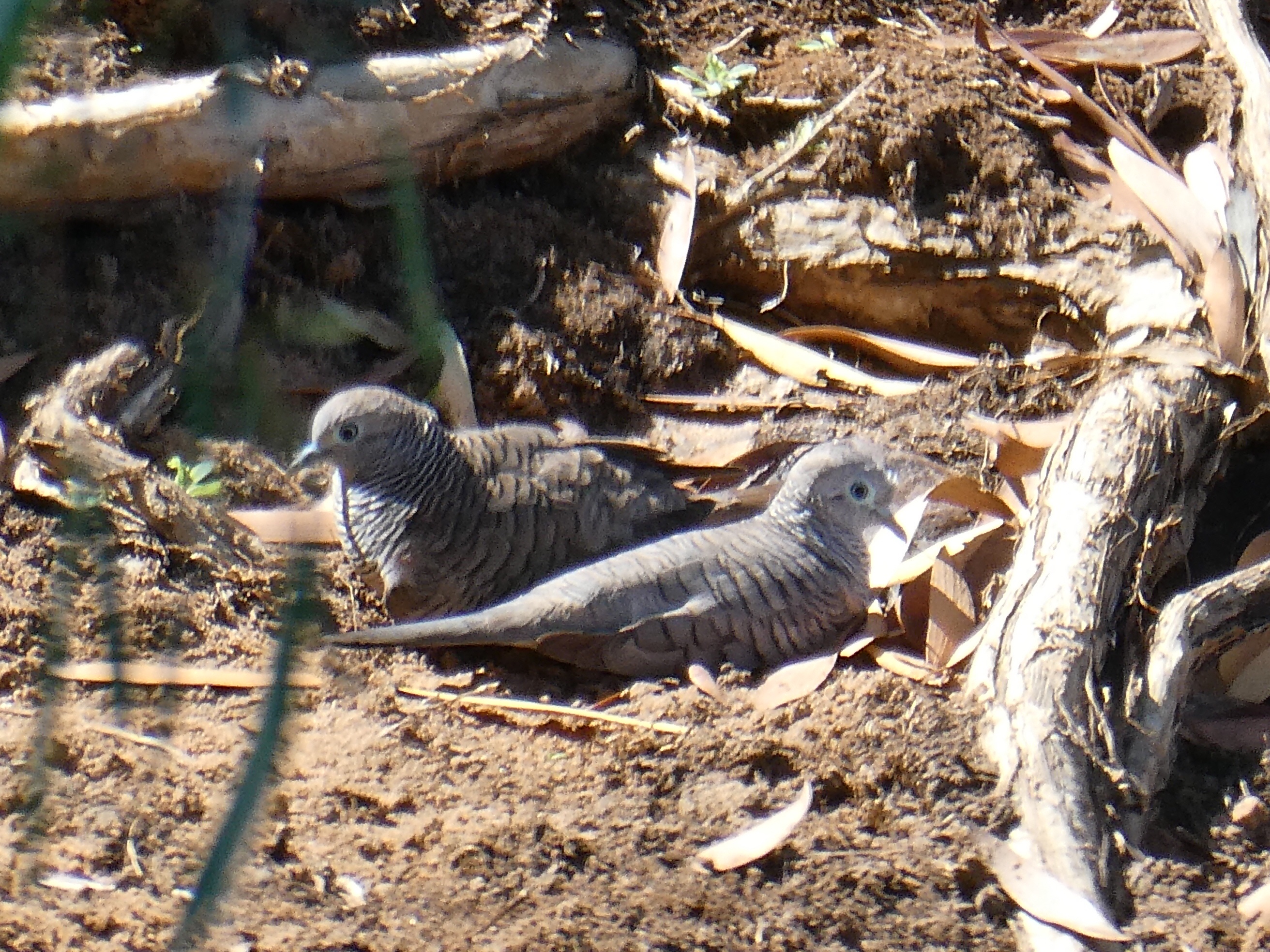
Peaceful dove (with the blue/gray eyes). These love to play on the road and lift at the last moment.
Long tailed finch
Brown falcon
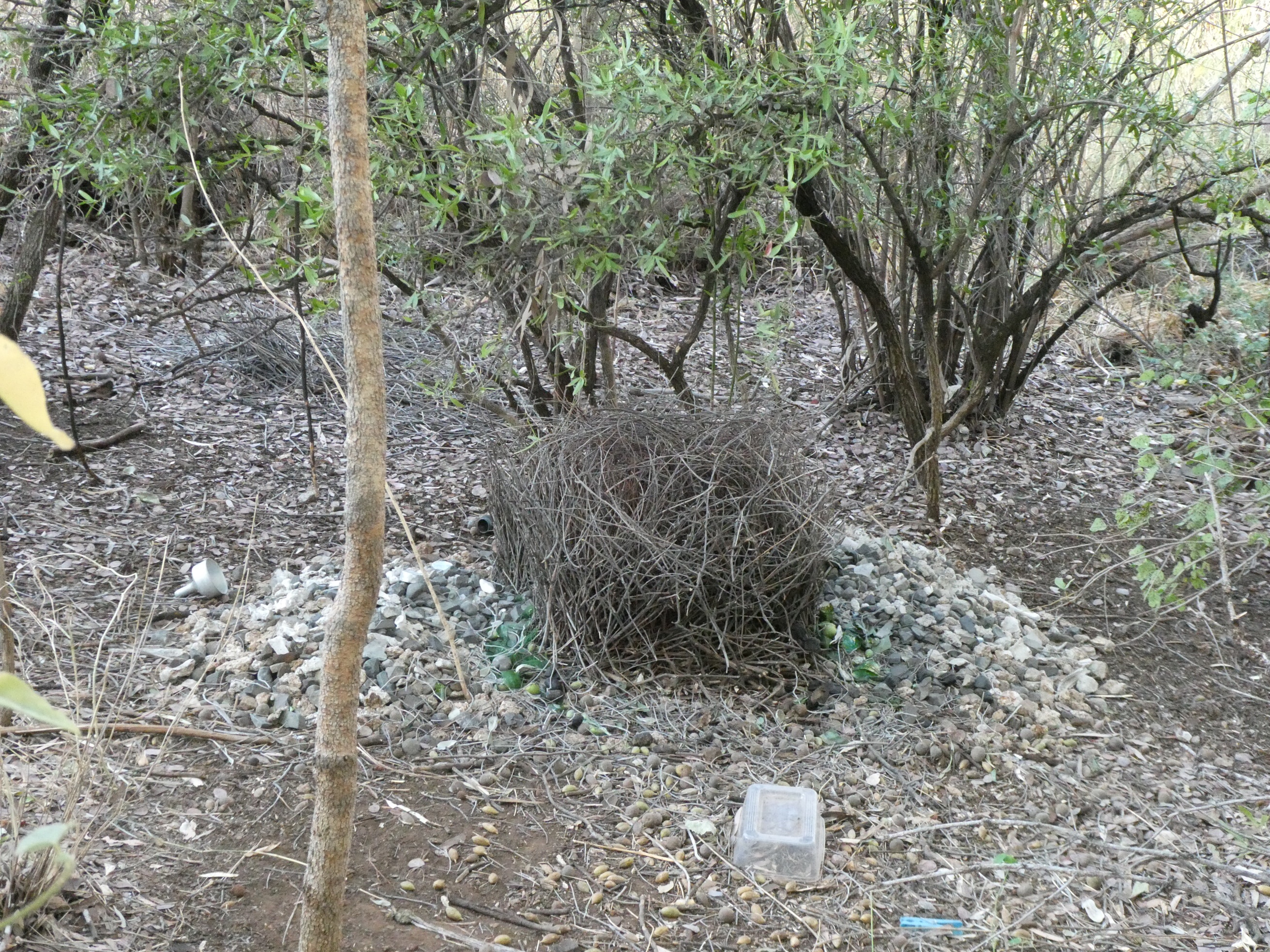
Great Bower bird (except when they wake you in the morning. I’m sure they are all eccentrics)
Intermediate egret
Straw neck ibis
Australian ibis
Masked lapwing
Magpie
Fairy Martin
Paperbark flycatcher
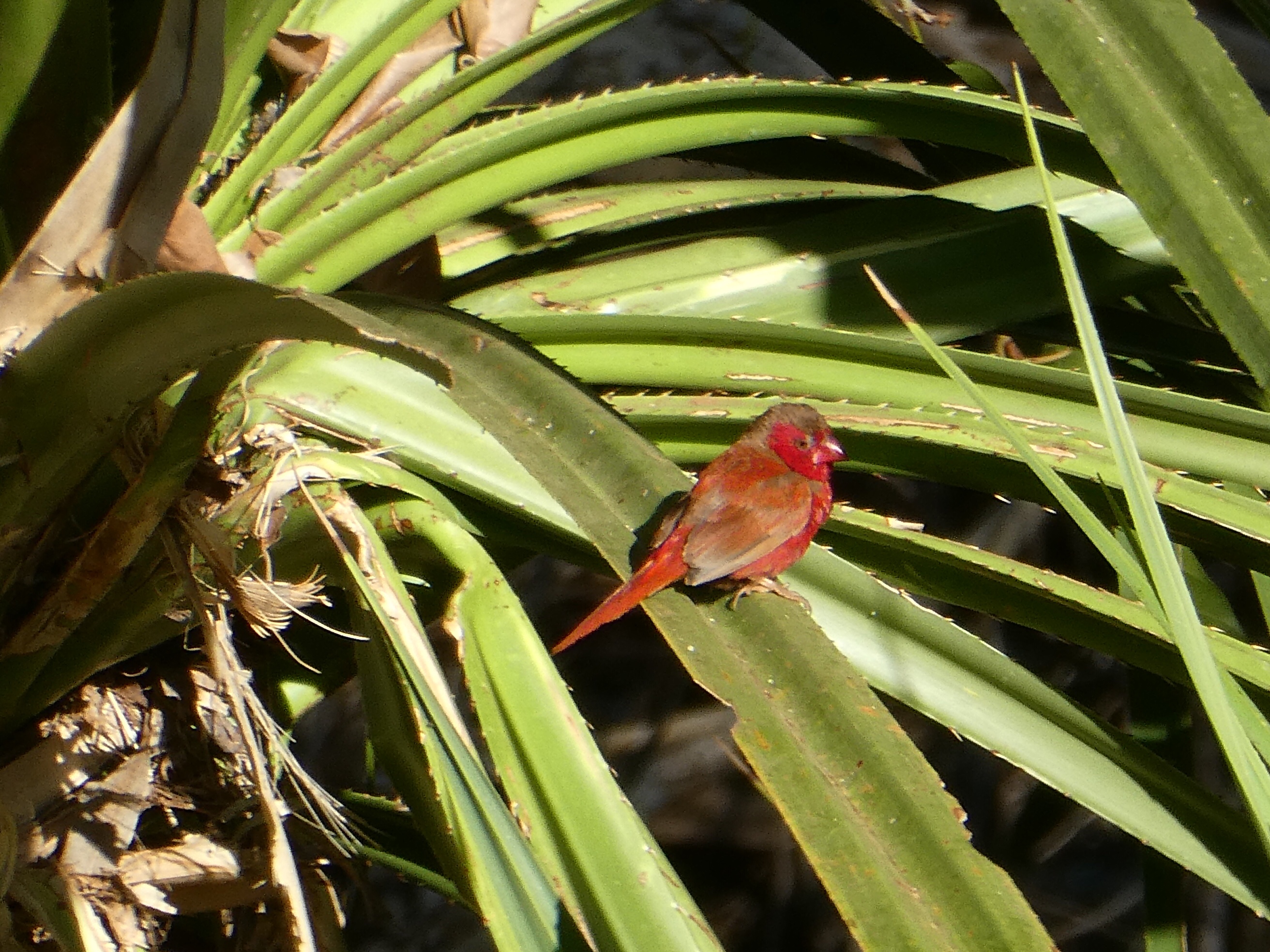
Crimson finch
Spinifex pigeon
Brolgas ( on the way out)
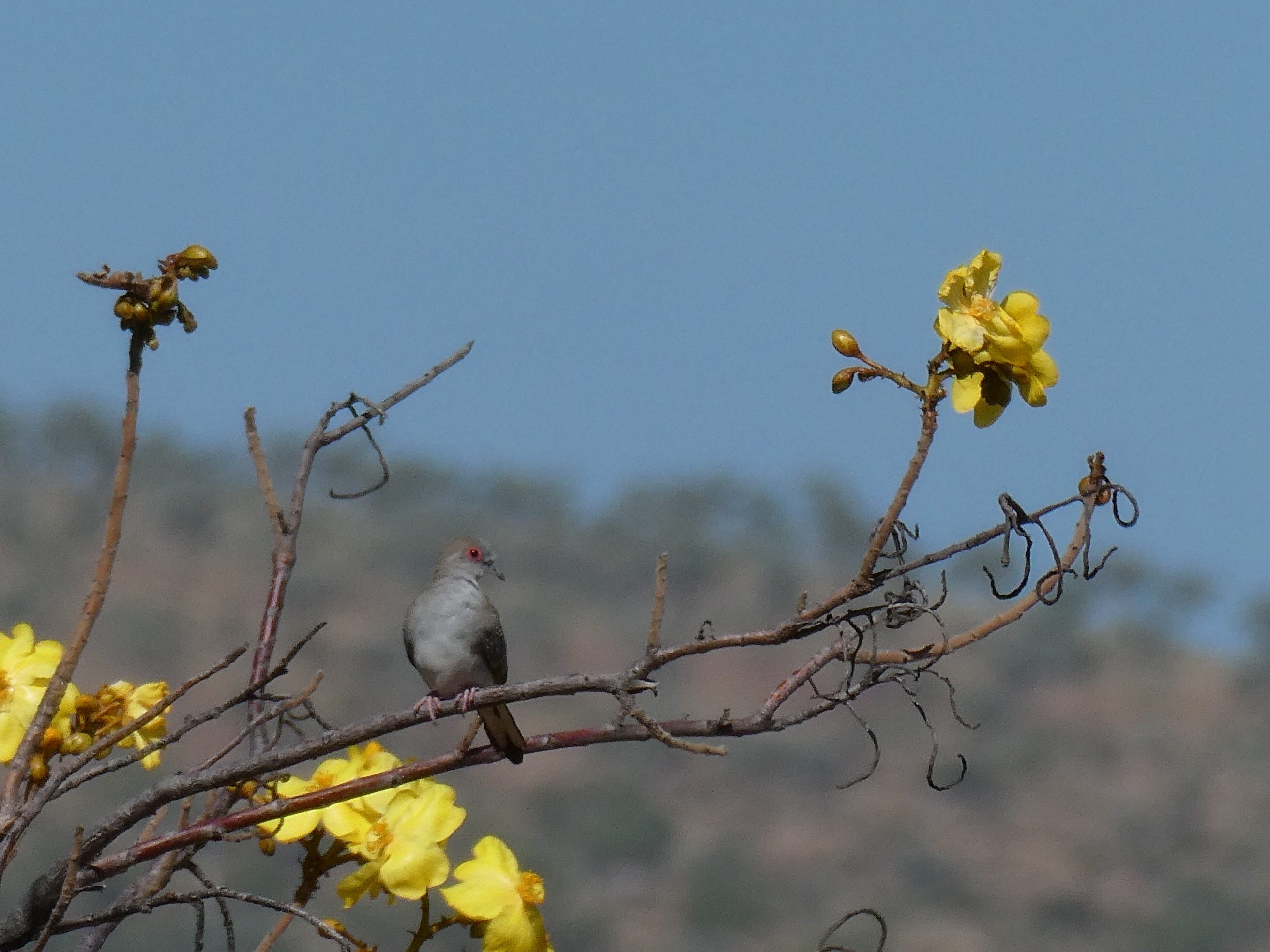
Diamond dove ( with red eyes)
 Luvapuzzle